Há uns dias, recebi o primeiro volume do que espero seja uma obra-prima, nomeadamente "A Ditadura Envergonhada" de Elio Gaspari. O livro (e os seus quatros volumes acompanhantes) conta a história da ditudura militar no Brasil entre 1964-1985, um assunto do que não sei nada. Que sorte que tenho milhares de páginas para ler.
Mas não estou aqui a fim de falar da ditadura, ou do trabalho de Gaspari. Preferiria fazer uma breve menção das coisas, além do texto, que se pode encontrar dentro de um livro. No caso de "A Ditadura Envergonhada", há uma dedicatória, de uma Senhora C. ao Senhor G. (Não vou escrever os seus nomes completos, porque o livro foi um presente, e quando um presente afasta-se para o sertão do mercado, sempre existe a possibilidade bem incómoda do doador o descobrindo.) Também achei um marcador das páginas, feito de um pedaço de cartão com as palavras "Pharmacia & Upjohn"- antiga fusão das empresas Pharmacia e Upjohn, hoje em dia parte de Pfizer- impresso nela.
Quando leio dedicatórias em livros em segunda mão, sempre tento de imaginar as circunstâncias em que foram escritas. Foi o livro um presente bem escolhido, ou uma escolha de último minuto? E os marcadores das páginas- por que o leitor escolheu este pedaço de cartão em vez de um bilhete, ou uma folha de papel, ou outra coisa? Fez ele leu o livro? Que pensou dele?
As notas marginais, as dedicatórias, os marcadores das páginas, todos são tesourinhos deixados, de propósito ou por acaso, pelos leitores. Tais coisas revelam-nos pequenos detalhes da vida do leitor (o simplesmente dono) anterior do livro, e enriquecem a nossa experiência de leitura. É fácil lembrar que a leitura é uma conversação entre autor e leitor, mas a oportunidade de ouvir (ou, corretamente, ver) o bate-papo entre o autor e um leitor diferente é um único prazer. Por isso, prefiro comprar livros usados, e sempre deixar os meus próprios presentes para os futuros leitores.
Boa leitura, amigos!
Tuesday, August 23, 2016

Thursday, July 28, 2016
Reflections upon the Warrior's Spell: Tasmania's Tarot
On my way back from Macau last summer I had a 15-hour layover in San Francisco. I dropped my bags off at the left luggage desk and took the train into the Mission, where, among other things, I loitered at Borderlands Books (and missed meeting Nick Mamatas by a few scant minutes), ate vegan food and drank beer that wasn't Tsingtao or San Miguel at Gracias Madre, and visited Aquarius Records for the second and equally triumphant time.
As you might expect, I found a number of albums worth purchasing at Aquarius, home of killer poetic album descriptions, and and the staff was kind enough to pack 'em up and ship 'em to Texas for me. Among those albums was Tarot's The Warrior's Spell, a compilation of their cassette-only demos (something I didn't know at the time, but would come into play when, a year later, they'd release their first full-length: see below). Like so many underground metal releases, the album art struck me as what I can only describe as amateurishly perfect. The title itself had the same effect: as a lifelong D&D player, the notion of a "warrior's spell" was just wrong, since spells are strictly within the purview of magic-users and (ugh) clerics, but it sounds cool, so who cares?
Here's the write-up from Aquarius Records:
The wizened seer tentatively flips the last card, her eyes illuminated by the dancing firelight. Her eyes widen as she gasps, before letting out a croaking grotesque cackle. "In your future...I see... MUSTY TASMANIAN WIZARD ROCK!" Well, congratulations! It must be your (Magician's) birthday, because no finer fate can await gods nor men than the prospect of delving into this arcane helping of mystical, mythical, organ-driven heavy folk prog from far off Tasmania. The Warrior's Spell comes hurtling across the astral plane courtesy of Tasmania's Heavy Chains Records (undoubtedly one of our fave new sources for weird & wonderful heavy rock and metal, along with Minotauro, having recently brought us the Outcast ep and latest The Wizar'd album), and conjures all of the torchlit corridor mystery & dusty crumbling aroma of some of our favorite proto-metal, proto-doom & witchy folky proggy rock bands, all swirling Hammond organ, plucked acoustic strums, seriously epic heavy riffing, plaintive flutes & distant nasal vocal prophecies. Uriah Heep is obviously a major touchstone here, the album title and cover clearly paying homage to the technicolor fantasy wonder-realm of Heep's 1972 opus The Magician's Birthday specifically. But just us clearly one can hear the sepia-toned Medieval echoes of Rainbow and the crackly mournful dirge of Pagan Altar. Tarot also shares their vocalist with another one of our favorite obscure quirky heavy acts, The Wizar'd! And while here he sounds significantly less theatrical and maniacal than in his other wilder doomed project, his more restrained approach in Tarot lends the music a much more sombre, majestick, archaic air. Very highly recommended for fans of all of those aforementioned groups as well as anything from early Wishbone Ash to Witchcraft to Comus to The Lamp Of Thoth to the Darkscorch Canticles compilation. Consider us well and truly... under the spell!!!
The Aquarius dudes nail the feel of the music itself, but like the Astral Rune Bastards record I wrote about a while back, listening to Tarot conjures up more than lyric-related imagery. The Warrior's Spell, less polished than the full-length Reflections (itself quite faithful to the analog sound of its influences, even though it was recorded with modern equipment), is particularly good at evoking the sort of scenes that one might imagine giving birth to the music itself. It's more than nostalgia for the days of '70s metal and hard rock, which neither I nor the members of Tarot ever experienced. It's the feeling of letting your imagination wander deeper and deeper into the fantastic as you kick back in your bedroom or basement with some albums borrowed from your buddy (say, Uriah Heep's The Magician's Birthday, like Aquarius Records suggested, or Reflections, Tarot's newest), a stack of Moorcock and Clark Ashton Smith paperbacks, the first edition AD&D Players Handbook, and maybe a joint or two.
People have been enjoying this kind of experience, with any number of aesthetic tweaks, forever, and it's one I continue to seek out. Heavy metal and the other trappings I mentioned above remain my primary method of doing so, and Tarot's ability to provide a killer soundtrack means that I can spend many an afternoon or evening lost in contemplation of not just wizards, fate, solitude, but a version of the 1970s that never quite was, or maybe just bled across time and space into our present day and the minds of a few dudes from Tasmania.
Check out Reflections here and The Warrior's Spell here, and get your fix of sweet riffs and organ lines. Don't forget to eyeball that album art while you're at it.
Later!
D.A.S.
As you might expect, I found a number of albums worth purchasing at Aquarius, home of killer poetic album descriptions, and and the staff was kind enough to pack 'em up and ship 'em to Texas for me. Among those albums was Tarot's The Warrior's Spell, a compilation of their cassette-only demos (something I didn't know at the time, but would come into play when, a year later, they'd release their first full-length: see below). Like so many underground metal releases, the album art struck me as what I can only describe as amateurishly perfect. The title itself had the same effect: as a lifelong D&D player, the notion of a "warrior's spell" was just wrong, since spells are strictly within the purview of magic-users and (ugh) clerics, but it sounds cool, so who cares?

Here's the write-up from Aquarius Records:
The wizened seer tentatively flips the last card, her eyes illuminated by the dancing firelight. Her eyes widen as she gasps, before letting out a croaking grotesque cackle. "In your future...I see... MUSTY TASMANIAN WIZARD ROCK!" Well, congratulations! It must be your (Magician's) birthday, because no finer fate can await gods nor men than the prospect of delving into this arcane helping of mystical, mythical, organ-driven heavy folk prog from far off Tasmania. The Warrior's Spell comes hurtling across the astral plane courtesy of Tasmania's Heavy Chains Records (undoubtedly one of our fave new sources for weird & wonderful heavy rock and metal, along with Minotauro, having recently brought us the Outcast ep and latest The Wizar'd album), and conjures all of the torchlit corridor mystery & dusty crumbling aroma of some of our favorite proto-metal, proto-doom & witchy folky proggy rock bands, all swirling Hammond organ, plucked acoustic strums, seriously epic heavy riffing, plaintive flutes & distant nasal vocal prophecies. Uriah Heep is obviously a major touchstone here, the album title and cover clearly paying homage to the technicolor fantasy wonder-realm of Heep's 1972 opus The Magician's Birthday specifically. But just us clearly one can hear the sepia-toned Medieval echoes of Rainbow and the crackly mournful dirge of Pagan Altar. Tarot also shares their vocalist with another one of our favorite obscure quirky heavy acts, The Wizar'd! And while here he sounds significantly less theatrical and maniacal than in his other wilder doomed project, his more restrained approach in Tarot lends the music a much more sombre, majestick, archaic air. Very highly recommended for fans of all of those aforementioned groups as well as anything from early Wishbone Ash to Witchcraft to Comus to The Lamp Of Thoth to the Darkscorch Canticles compilation. Consider us well and truly... under the spell!!!
The Aquarius dudes nail the feel of the music itself, but like the Astral Rune Bastards record I wrote about a while back, listening to Tarot conjures up more than lyric-related imagery. The Warrior's Spell, less polished than the full-length Reflections (itself quite faithful to the analog sound of its influences, even though it was recorded with modern equipment), is particularly good at evoking the sort of scenes that one might imagine giving birth to the music itself. It's more than nostalgia for the days of '70s metal and hard rock, which neither I nor the members of Tarot ever experienced. It's the feeling of letting your imagination wander deeper and deeper into the fantastic as you kick back in your bedroom or basement with some albums borrowed from your buddy (say, Uriah Heep's The Magician's Birthday, like Aquarius Records suggested, or Reflections, Tarot's newest), a stack of Moorcock and Clark Ashton Smith paperbacks, the first edition AD&D Players Handbook, and maybe a joint or two.
People have been enjoying this kind of experience, with any number of aesthetic tweaks, forever, and it's one I continue to seek out. Heavy metal and the other trappings I mentioned above remain my primary method of doing so, and Tarot's ability to provide a killer soundtrack means that I can spend many an afternoon or evening lost in contemplation of not just wizards, fate, solitude, but a version of the 1970s that never quite was, or maybe just bled across time and space into our present day and the minds of a few dudes from Tasmania.
Check out Reflections here and The Warrior's Spell here, and get your fix of sweet riffs and organ lines. Don't forget to eyeball that album art while you're at it.
Later!
D.A.S.
Saturday, June 18, 2016
Laxmanrao Sardessai: "18 de Junho"
The 18th of June is Goa Revolution Day, which has been celebrated since 1980. It marks the day in 1946 that the movement for independence from Portugal came into its own. Public meetings, such as the one addressed by Ram Manohar Lohia and Julião Menezes on 18 June 1946, were illegal under colonial rule, and therefore suppressed. For the next 15 years the Portuguese authorities faced a rising tide of resistance to their rule, in forms ranging from peaceful satyagraha and the formation of anti-colonial political parties to direct action carried out by the Azad Gomantak Dal. In December 1961, the Indian military finished what others had started and launched Operation Vijay, which swept into Goa and, in three days, put an end to 450 years of Portuguese rule. Goa was annexed to India, along with Damão and Diu, the even smaller remnants of the Portuguese Estado da Índia.
The Goan writer Laxmanrao Sardessai was jailed twice by the Portuguese for his involvement in the Goan independence movement. In the early 1960s, the newly-minted union territory of Goa faced the prospect of being merged into the neighboring state of Maharashtra, which Sardessai vehemently opposed and agitated against. While the following poem commemorates the historic actions of 1946, it was published during the period in which Sardessai wrote poems in Portuguese (as opposed to short stories in Marathi, which made up the overwhelming bulk of his literary output) as part of his campaign against merger. These poems were published in the Portuguese-language newspapers A Vida and O Heraldo, the latter of which continues today, having switched to publishing in English in 1983.
Enjoy, folks, and here's to the continuing struggle against colonialism in all its forms!
D.A.S.
"18 de Junho"
Laxmanrao Sardessai
publicado no jornal A Vida,
18 Junho 1966
Porque será, ó 18
de Junho,
Que estás tão
desolado?
Será porque vês
Extinguir-se,
lentamente,
A chama que te
animara
Há vinte anos
E o sonho que teus
sequazes
Sonharam
Duma Goa livre e
bela?
Será porque tanto
sangue
Que teus heróis
verteram,
Foi em vão
E só lhes trouxe
Miséria e lágrimas
E nova escravidão?
Será porque medrou
nesta terra
O mal e esvaiu-se o
bem
E os vermes
tripudiam
Sobre a carcassa?
E estertores
retumbam
Nos lares?
E terroriza a queda
Dos valores morais?
Será porque
corações inocentes
Choram a maldade
dos potentados?
Será porque os
ídolos de barro
Sorriem para
escárneo
Dos bons e pacatos
E os criminosos se
arvoram em juizes
E os justos se
tornam cobardes?
Não chores, não,
ó 18 de Junho,
Tu inspiraste um
povo inteiro
A sofrer e morrer
Por um ideal!
Do teu seio sairá,
em breve,
Outro 18, belo e
radiante,
Que verá teus
sonhos
Tomar vulto e
brilhar
Como minaretes
dourados
Nos céus azuis
desta terra,
Hoje calcada,
Ó dia glorioso
Somos teus filhos.
Filhos de Revolução
E tu és nosso pai
Pai de heróis,
Que sabem sofrer
por um ideal.
***
"18th of June"
Laxmanrao Sardessai
Published in the newspaper A Vida,
18 June 1966
Why is it, oh 18th
of June,
That you are so
forlorn?
Is it because you
see
The flame that
animated you
Twenty years ago
Being slowly
extinguished
Along with the
dream that your followers
Dreamed
Of a Goa free and
beautiful?
Is it because so
much of the blood
Your heroes shed
Was in vain
And only brought
them
Misery and tears
And a new slavery?
Is it because evil
has thrived in this land
And good has
evaporated
And the worms
rejoice
Over its carcass?
And death-rattles
resound
In the homes?
And the decay of
moral values
Terrifies you?
Is it because
innocent hearts
Weep at the
wickedness of the rulers?
Is it because clay
idols
Smile in mockery
Of the good and
peaceful
And criminals
pretend to be judges
And the just become
cowards?
No, do not weep, oh
18th of June,
You inspired an
entire people
To suffer and die
For an ideal!
From your breast
will soon come
Another 18th,
beautiful and radiant,
That will see your
dreams
Take shape and
shine
Like golden
minarets
In the blue skies
of this land,
Today downtrodden
Oh glorious day
We are your
children.
Children of the
Revolution
And you are our
father
Father of heroes,
Who know how to
suffer for an ideal.
Friday, June 10, 2016
Feliz Dia de Portugal, de Camões, e das Comunidades Portuguesas!/Tradução do poema "Só Gosto" de Vimala Devi
Aqui no Texas o Dia de Portugal, de Camões, e das Comunidades Portuguesas está quase no fim. Por isso, ofereço-lhes uma tradução de um poema da escritora portuguesa Vimala Devi (o pseudónimo de Teresa da Piedade de Baptista Almeida), que nasceu em Goa e escreveu com Manuel de Seabra a obra-prima dos estudos da língua portuguesa no antigo Índia Portuguesa: A Literatura Indo-Portuguesa. Posso dizer que ela era uma das vozes mais fortes da literatura goesa na segunda metade do século XX. Agora ela vive em Espanha, onde escreve em espanhol, catalão, e esperanto.
Nunca traduzi um poema tão curto. É, num sentido, mais difícil do que um verso mais longo.
Adeus, amigos!
D.A.S.
***
"Só Gosto"
Vimala Devi
Do Céu, com estrelas.
Da Terra, sem gente.
-----
"I Only Like"
Vimala Devi
The sky with stars.
The earth without people.
Nunca traduzi um poema tão curto. É, num sentido, mais difícil do que um verso mais longo.
Adeus, amigos!
D.A.S.
***
"Só Gosto"
Vimala Devi
Do Céu, com estrelas.
Da Terra, sem gente.
-----
"I Only Like"
Vimala Devi
The sky with stars.
The earth without people.
Wednesday, June 08, 2016
Camilo Pessanha: "Floriram por engano as rosas bravas"
Apresento-lhes mais um poema daquele homem entre mundos, Camilo Pessanha. Geralmente dizemos que uma pessoa está entre dois mundos, mas no caso de Pessanha temos um homem entre um conjunto de muitos mundos contrários: os do Ocidente e do Oriente, do metrópole e da colônia, dos deveres do funcionário público e do estetismo, do exílio e do integração. Obviamente, esta série de díades não basta para esboçar um retrato completo de Pessanha (ou, na verdade, qualquer pessoa, coisa, ou ideia, porque não vivemos num mundo binário).
Este poema é, espantosamente, um que nunca li até há poucos dias. Pensei que tinha lido todos os poemas de Clepsidra, mas estava enganado. A ortografia é moderna, mas a pontuação da versão portuguesa está em acordo com a versão de 1920 de Edições Lusitânia (que não usa o circunflexo no seu nome!). Como de costume, não ha título próprio, e por isso uso a primeira linha do poema.
Agora, na cúspide do verão, pode-se dizer que um poema sobre a neve do inverno não faz sentido, mas que poderia fazer? Espero que vocês gostem do poema e a sua tradução para inglês. Vou escritar mais em breve, porque o dia de Portugal, de Camões, e das Comunidades Portuguesas (10 de Junho) está a chegar!
Obrigado e adeus, caros leitores!
Abraços,
D.A.S.
-----
I give you another translation of a poem by that man between worlds, Camilo Pessanha. We usually speak of a person being between two worlds, but in Pessanha's case we have a man between a set of conflicting worlds: East and West, homeland and colony, the duties of the public servant and and aestheticism, exile and integration. Obviously this series of dyads doesn't suffice to sketch a full picture of Pessanha (or, really, any given person, thing, or idea, because the world isn't binary).
Surprisingly, I hadn't read this poem until a few days ago. I thought I'd read every poem in Clepsidra, but I was mistaken. The spelling is updated, though the punctuation remains true to that found in the 1920 Edições Lusitânia (which on the book's title page doesn't use the circumflex!) version. As usual, the poem doesn't have a proper title, so I've used the first line instead.
Now that we're on the cusp of summer, a poem about the snows of winter might not make sense, but what can you do? I hope y'all enjoy the poem (in both of its forms), and I'll be writing again soon, as Portugal Day is coming up on the 10th.
Thanks for reading, and take it easy, folks.
Yours,
D.A.S.
-----
"Floriram por engano as rosas bravas"
Camilo Pessanha
Floriram por engano as rosas bravas
No inverno: veio o vento desfolhá-las...
Em que cismas, meu bem? Porque me calas
As vozes com que há pouco me enganavas?
Castelos doidos! Tão cedo caístes!...
Onde vamos, alheio o pensamento,
De mãos dadas? Teus olhos, que um momento
Perscrutaram nos meus, como vão tristes!
E sobre nós cai nupcial a neve,
Surda, em triunfo, pétalas, de leve
Juncando o chão, na acrópole de gelos...
Em redor do teu vulto é como um véu!
Quem as esparze — quanta flor — do céu,
Sobre nós dois, sobre os nossos cabelos?
***
"By mistake the wild roses bloomed"
Camilo Pessanha
By mistake the wild roses bloomed
In winter: the wind came and stripped away their leaves...
What are you pondering, my darling? Why do you silence
The voices with which you fooled me just now?
Lunatic castles! How soon you fell!
Where are we going, lost in thought,
Hand in hand? Your eyes, which for a moment
Looked deeply into mine, how sad they are!
And over us the snow falls, bridal,
Deaf, triumphant, petals lightly
Covering the floor in the acropolis of ice...
It is like a veil over your face!
Who scattered them — so many flowers — from the sky,
Over the two of us, over our hair?
Este poema é, espantosamente, um que nunca li até há poucos dias. Pensei que tinha lido todos os poemas de Clepsidra, mas estava enganado. A ortografia é moderna, mas a pontuação da versão portuguesa está em acordo com a versão de 1920 de Edições Lusitânia (que não usa o circunflexo no seu nome!). Como de costume, não ha título próprio, e por isso uso a primeira linha do poema.
Agora, na cúspide do verão, pode-se dizer que um poema sobre a neve do inverno não faz sentido, mas que poderia fazer? Espero que vocês gostem do poema e a sua tradução para inglês. Vou escritar mais em breve, porque o dia de Portugal, de Camões, e das Comunidades Portuguesas (10 de Junho) está a chegar!
Obrigado e adeus, caros leitores!
Abraços,
D.A.S.
-----
I give you another translation of a poem by that man between worlds, Camilo Pessanha. We usually speak of a person being between two worlds, but in Pessanha's case we have a man between a set of conflicting worlds: East and West, homeland and colony, the duties of the public servant and and aestheticism, exile and integration. Obviously this series of dyads doesn't suffice to sketch a full picture of Pessanha (or, really, any given person, thing, or idea, because the world isn't binary).
Surprisingly, I hadn't read this poem until a few days ago. I thought I'd read every poem in Clepsidra, but I was mistaken. The spelling is updated, though the punctuation remains true to that found in the 1920 Edições Lusitânia (which on the book's title page doesn't use the circumflex!) version. As usual, the poem doesn't have a proper title, so I've used the first line instead.
Now that we're on the cusp of summer, a poem about the snows of winter might not make sense, but what can you do? I hope y'all enjoy the poem (in both of its forms), and I'll be writing again soon, as Portugal Day is coming up on the 10th.
Thanks for reading, and take it easy, folks.
Yours,
D.A.S.
-----
"Floriram por engano as rosas bravas"
Camilo Pessanha
Floriram por engano as rosas bravas
No inverno: veio o vento desfolhá-las...
Em que cismas, meu bem? Porque me calas
As vozes com que há pouco me enganavas?
Castelos doidos! Tão cedo caístes!...
Onde vamos, alheio o pensamento,
De mãos dadas? Teus olhos, que um momento
Perscrutaram nos meus, como vão tristes!
E sobre nós cai nupcial a neve,
Surda, em triunfo, pétalas, de leve
Juncando o chão, na acrópole de gelos...
Em redor do teu vulto é como um véu!
Quem as esparze — quanta flor — do céu,
Sobre nós dois, sobre os nossos cabelos?
***
"By mistake the wild roses bloomed"
Camilo Pessanha
By mistake the wild roses bloomed
In winter: the wind came and stripped away their leaves...
What are you pondering, my darling? Why do you silence
The voices with which you fooled me just now?
Lunatic castles! How soon you fell!
Where are we going, lost in thought,
Hand in hand? Your eyes, which for a moment
Looked deeply into mine, how sad they are!
And over us the snow falls, bridal,
Deaf, triumphant, petals lightly
Covering the floor in the acropolis of ice...
It is like a veil over your face!
Who scattered them — so many flowers — from the sky,
Over the two of us, over our hair?
Tuesday, May 31, 2016
杜甫的“春夜喜雨” / Du Fu's "Enjoying the Rain on a Spring Night"
We've been getting a lot of rain here lately, and I mean a lot. Houston's northern and northwestern suburbs are flooding seemingly every other week, and the city itself is perpetually waterlogged. The combination of El Niño, a local culture with a boundless appetite for more suburbs and their attendant oceans of concrete, and a city government that bends over backward for property developers has made Houston more prone to flooding than ever. The shortsightedness of it all is appalling, but, alas, not surprising.
Anyway, the recent rain inspired me to translate the following poem by 杜甫 Du Fu, the famous Tang dynasty poet. I've been trying to improve my classical Chinese lately so I can read 澳門記略 (AKA "the monograph on Macau", an 18th-century account of the city written by two Qing mandarins). The "brocade city" mentioned in the poem's last line is a reference to the city of Chengdu. None of the translations I've read, such as this one by Brendan O'Kane or Mark Alexander's use 重 quite the way I've chosen to, but I think it works.
Enjoy the poem, stay dry, and demand better flood control and city planning from your elected representatives. May the flowers bloom riotously after the rain, wherever you may live.
微臣
史大衛
春夜喜雨
杜甫
好雨知時節 當春乃發生
隨風潛入夜 潤物細無聲
野徑雲俱黑 江船火獨明
曉看紅濕處 花重錦官城
"Enjoying the Rain on a Spring Night"
Du Fu
Good rain knows its time
It starts to fall when spring comes
Following the wind, it slips into the night
Making things damp with hardly a sound
Black clouds all along the back roads
A lone boat's lamp bright on the river
Dawn finds this place red and wet
And the brocade city heavy with flowers
Anyway, the recent rain inspired me to translate the following poem by 杜甫 Du Fu, the famous Tang dynasty poet. I've been trying to improve my classical Chinese lately so I can read 澳門記略 (AKA "the monograph on Macau", an 18th-century account of the city written by two Qing mandarins). The "brocade city" mentioned in the poem's last line is a reference to the city of Chengdu. None of the translations I've read, such as this one by Brendan O'Kane or Mark Alexander's use 重 quite the way I've chosen to, but I think it works.
Enjoy the poem, stay dry, and demand better flood control and city planning from your elected representatives. May the flowers bloom riotously after the rain, wherever you may live.
微臣
史大衛
春夜喜雨
杜甫
好雨知時節 當春乃發生
隨風潛入夜 潤物細無聲
野徑雲俱黑 江船火獨明
曉看紅濕處 花重錦官城
"Enjoying the Rain on a Spring Night"
Du Fu
Good rain knows its time
It starts to fall when spring comes
Following the wind, it slips into the night
Making things damp with hardly a sound
Black clouds all along the back roads
A lone boat's lamp bright on the river
Dawn finds this place red and wet
And the brocade city heavy with flowers
Monday, April 04, 2016
歐陽脩 - 清明 Ouyang Xiu - "On the Pure Brightness Festival"
Today is 清明節 the Qingming Festival, also known as the Pure Brightness Festival or, more to my taste, Tomb-Sweeping Day. Celebrated in China and overseas Chinese communities, it's a day to remember one's ancestors, clean their graves, and make offerings to them. To mark the occasion, here's my translation of one of the poems from the Song Dynasty poet 歐陽脩 Ouyang Xiu's "West Lake is Good" (西湖好) series. There's no precise title for this poem, by the way, so as usual the first line provides the name by which it's usually known. Ouyang, by the way, is one of a very few two-character 姓 xing, or family names.
Enjoy, folks, and burn some incense for your departed loved ones.
微臣
史大偉
***
清明上已西湖好
歐陽脩
清明上已西湖好
滿目繁華
爭道誰家
綠柳朱輪走鈿車
游人日暮相將去
醒醉喧嘩
路轉堤斜
直到城頭總是花
"On the Pure Brightness Festival"
Ouyang Xiu
During the Pure Brightness Festival, West Lake is good
Bountiful flowers fill one's eyes
Who would bother to speak?
Green willows and red wheels of ornamented carriages, fleeting
At sunset visitors see each other off
Sober or drunk, they make a racket
The road veers off, the dike is uneven
All the way to the city, flowers everywhere
Enjoy, folks, and burn some incense for your departed loved ones.
微臣
史大偉
***
清明上已西湖好
歐陽脩
清明上已西湖好
滿目繁華
爭道誰家
綠柳朱輪走鈿車
游人日暮相將去
醒醉喧嘩
路轉堤斜
直到城頭總是花
"On the Pure Brightness Festival"
Ouyang Xiu
During the Pure Brightness Festival, West Lake is good
Bountiful flowers fill one's eyes
Who would bother to speak?
Green willows and red wheels of ornamented carriages, fleeting
At sunset visitors see each other off
Sober or drunk, they make a racket
The road veers off, the dike is uneven
All the way to the city, flowers everywhere
Friday, April 01, 2016
Miscellanea
I'm not pleased that it's been a month since I last posted, and the posts I have in the works are, well, still in the works, so here are some links and such, just like a traditional weblog might offer.
-Carpenter Brut is one of my favorite musical acts as of late, and always makes good videos. Turbo Killer is great example of why that is. Foxy dames made even more so by the glowing inverted crosses on their foreheads, weird dudes sporting gas masks or shotguns, sweet cars, cruciform spacecraft, and a general air of glorious trashiness- if that ain't good viewing, I don't know what is. Carpenter Brut's other videos are worth your time, too.
-I missed 2016's annual literary festival in Macau, the Rota das Letras, but reading about it online introduced me to the poet Matilde Campilho. A native of Portugal who spent a few years in Brazil and as a result has acquired, from what I can tell from some of the interviews with her I've listened to, a Carioca accent when she needs it, I've found myself intrigued by her work. As someone who's studied Portuguese with teachers from Brazil and Portugal, I've tried to find the sweet spot between the two accents (which, like English, are really groups of numerous regional accents), so it's cool to actually hear a native speaker of Portuguese do the same and do a good job of it.
-If you're interested in leftist politics (the real kind, not those of the Democratic party here in the States), Jacobin magazine is an accessible start. The graphic design is eye-catching as hell, too. There's also Salvage, edited by China Mieville (among others). Unsurprisingly, it's a denser read, but no less rewarding for it. "Bleak is the new red."
-This may be the last night of the year we can have a fire or turn on the heat here in Houston. (Observation; no hyperlink provided.)
-If Internet history and pre-WWW protocols (which, alas, I mostly missed upon my initial visits to the World Wide Web back in '96 or so, but which I utilize now) are your thing, make sure your browser is gopher-capable and visit Floodgap's gopher server, which serves as a clearing-house of modern gopher activity.
And on that note, I'm out. This corpse is tired. Boa noite, amigos: I'm gonna listen to Carbon Based Lifeforms' "Photosynthesis", reminisce about my buddy Pete's first post-college digs up in Dallas and the gloriously pre-2001 tech crash nature thereof, and call it a night.
It feels good to just write shit again. I need to do it more often.
-Carpenter Brut is one of my favorite musical acts as of late, and always makes good videos. Turbo Killer is great example of why that is. Foxy dames made even more so by the glowing inverted crosses on their foreheads, weird dudes sporting gas masks or shotguns, sweet cars, cruciform spacecraft, and a general air of glorious trashiness- if that ain't good viewing, I don't know what is. Carpenter Brut's other videos are worth your time, too.
-I missed 2016's annual literary festival in Macau, the Rota das Letras, but reading about it online introduced me to the poet Matilde Campilho. A native of Portugal who spent a few years in Brazil and as a result has acquired, from what I can tell from some of the interviews with her I've listened to, a Carioca accent when she needs it, I've found myself intrigued by her work. As someone who's studied Portuguese with teachers from Brazil and Portugal, I've tried to find the sweet spot between the two accents (which, like English, are really groups of numerous regional accents), so it's cool to actually hear a native speaker of Portuguese do the same and do a good job of it.
-If you're interested in leftist politics (the real kind, not those of the Democratic party here in the States), Jacobin magazine is an accessible start. The graphic design is eye-catching as hell, too. There's also Salvage, edited by China Mieville (among others). Unsurprisingly, it's a denser read, but no less rewarding for it. "Bleak is the new red."
-This may be the last night of the year we can have a fire or turn on the heat here in Houston. (Observation; no hyperlink provided.)
-If Internet history and pre-WWW protocols (which, alas, I mostly missed upon my initial visits to the World Wide Web back in '96 or so, but which I utilize now) are your thing, make sure your browser is gopher-capable and visit Floodgap's gopher server, which serves as a clearing-house of modern gopher activity.
And on that note, I'm out. This corpse is tired. Boa noite, amigos: I'm gonna listen to Carbon Based Lifeforms' "Photosynthesis", reminisce about my buddy Pete's first post-college digs up in Dallas and the gloriously pre-2001 tech crash nature thereof, and call it a night.
It feels good to just write shit again. I need to do it more often.
Tuesday, March 01, 2016
No 90o aniversário da morte de Camilo Pessanha
No dia 1 de Março, 1926, o poeta português Camilo Pessanha faleceu em Macau. Hoje, 90 anos depois da morte do autor de Clepsydra, ele está homenageado na Rota das Letras, o Festival Literário de Macau. Eu li que os estudantes da Escola Portuguesa de Macau vão fazer romagem à sua sepultura e declamar poemas; estou de acordo com essa ideia.
Apologies for the silence as of late. I've been pretty busy with one thing or another: trying to find an agent or publisher for my novel, working on a project I don't want to discuss until I have a better idea of its future, attending Owlcon, and studying Portuguese online via the Instituto Camões, which has already proven to be a welcome challenge. I'll try to get back to writing here more often.
Até breve, caros leitores!
Apologies for the silence as of late. I've been pretty busy with one thing or another: trying to find an agent or publisher for my novel, working on a project I don't want to discuss until I have a better idea of its future, attending Owlcon, and studying Portuguese online via the Instituto Camões, which has already proven to be a welcome challenge. I'll try to get back to writing here more often.
Até breve, caros leitores!
Saturday, December 19, 2015
Laxmanrao Sardessai: "Avante, Goeses, Avante!"
On the 19th of December, 1961, Indian troops accepted the surrender of the oldest European colonies in the subcontinent, which had belonged to Portugal for the past 450 years. The Estado da Índia, comprised at the time of Damão, Diu, and Goa, wisely opted to put up little fight, despite direct orders to the contrary from the metropolitan government. In 1967 Goa rejected merger with the neighboring state of Maharashtra, and in 1987 Daman (as it's spelled in English) and Diu became a union territory, while Goa became a full-fledged state.
19 December is traditionally celebrated as Goa Liberation Day, though, as one might expect, "liberation" can be a contentious term. To recognize the occasion, rather than offer an ill-formed opinion, I've translated a 1966 poem by Laxmanrao Sardessai. In addition to writing hundreds of stories in Konkani and Marathi, Sardessai had poems published in Portuguese-language newspapers after Liberation. While not all of his poems were political, those that were were decidedly anti-merger, such as that which follows. My translation is a somewhat hasty one, but I hope that it'll do for the time being.
Como sempre, agradeço-lhe, caro leitor.
D.A.S.
P.S. The definitive end of the Portuguese empire also came on the 19th of December, albeit 38 years later: Macau, Portugal's last overseas possession, was returned to China on this date in 1999.
-----
Avante, Goeses, Avante!
Laxmanrao Sardessai
1966
Avante, goeses, avante!
Que está próxima a batalha
Que decidirá a vossa sorte.
Estão do vosso lado
A Verdade e a Justiça,
A Honra e a Dignidade
E, doutro lado,
A ambição do mando,
A cupidez nojenta,
Indignidades sem conta,
A mentira e a doblez,
A traição e a maquinação.
É a luta entre dois princípios,
O princípio do bem
E o princípio do mal.
Depende de vós a vitória
Dessa batalha imposta
Ao vosso povo pacato
Em nome da Democracia
Que entre nós está moribunda.
Na sua nudez a pergunta é esta:
Que quereis?
Viver na vossa terra
Ou lançar-vos ao mar?
A que miséria a Democracia
Vos lançou, santo Deus!?
Viver ou morrer?
Morrer é, de certo, diluir-se
Um povo na mole heterogénia doutro.
Vós, através da longa história,
Prezastes a honra e a dignidade.
Proclama ao mundo
Que sois um povo distinto.
A vossa língua e os vossos costumes
O vosso temperamento
E a vossa cultura,
A vossa humanidade,
E o vosso intelecto
Não são para serem
Apagados ou suprimidos
Da face da terra.
Não! Não!
Cabe-vos, goeses,
Repelir a afronta,
Esquecer, por amor
Dos vossos avoengos,
Vossas rixas e ódios
E as vaidades que vos minam,
Provar que os goeses têm um único partido,
Partido duma Goa una e livre,
Arrojai aos ventos
As diferenças que vos dividem,
Que mesquinhas ambições alimentais
Quando o povo é arrastado para o abismo!
Em que miseráveis partidos
Vos entretendes
Quando o inimigo procura
Calcar-vos, reduzir-vos à poeira,
Que criminosa negligência a vossa,
Quando as fileiras do inimigo
Se cerram
Para os fins da peleja.
Amigos! Sacudi, sem demora,
A letargia e a modorra!
Abraçai os ignorantes e os pobres.
Preparai-os com sacrifícios
Para a luta.
Levei a cada casa
A mensagem da guerra –
Guerra contra as ambições do mando – !
Sacrificai tudo!
Para salvar a terra,
Terra de vossos pais
E de vossos filhos.
Terra que está
Em iminente perigo
Por culpa dos vossos.
Avante, goeses, avante
E a vitória será vossa!
***
Onward, Goans, Onward!
Laxmanrao Sardessai
1966
Onward, Goans, onward!
For near is the battle
That will decide your fate.
On your side are
Truth and Justice,
Honor and Dignity
And, on the other side,
The ambition of power,
Vile cupidity,
Countless indignities,
Lies and duplicity,
Treachery and machination.
It is the fight between two principles,
The principle of good
And the principle of evil.
Victory depends upon you
In that battle, imposed
On your peaceful people
In the name of the Democracy
Which among us is dying.
Put nakedly, the question is this:
What do you want?
To live on your own land
Or be cast into the sea?
Into what misery has Democracy
Cast you, dear God!?
To live or die?
To die is, certainly, to dilute
One people in the heterogenous mass of the other.
You, throughout your long history,
Have valued honor and dignity.
Proclaim to the world
That you are a distinct people.
Your language and your customs
Your temperament
And your culture,
Your humanity,
And your intellect
Will not be
Erased or removed
From the face of the earth.
No! No!
It is up to you, Goans,
To turn away from insults,
To forget, for the love
Of your ancestors,
Your brawls and hates
And the vanities that undermine you,
To prove that Goans have a single body,
The body of a Goa unified and free,
Throw to the wind
The differences that divide you,
The petty ambitions you feed
While the people are dragged toward the abyss!
With miserable parties
You entertain yourselves
While the enemy seeks
To trample you, reduce you to dust,
Such criminal neglect of yours,
While the ranks of the enemy
Close in
To make battle.
Friends! Shake off, without delay,
Your lethargy and drowsiness!
Embrace the unlearned and the poor.
Prepare them with sacrifices
For the fight.
Take to every home
The message of war –
War against the ambitions of power – !
Sacrifice everything!
To save the land,
The land of your fathers
and of your children.
Land that is
In imminent danger
By your own fault.
Onward, Goans, onward
And victory will be yours!
19 December is traditionally celebrated as Goa Liberation Day, though, as one might expect, "liberation" can be a contentious term. To recognize the occasion, rather than offer an ill-formed opinion, I've translated a 1966 poem by Laxmanrao Sardessai. In addition to writing hundreds of stories in Konkani and Marathi, Sardessai had poems published in Portuguese-language newspapers after Liberation. While not all of his poems were political, those that were were decidedly anti-merger, such as that which follows. My translation is a somewhat hasty one, but I hope that it'll do for the time being.
Como sempre, agradeço-lhe, caro leitor.
D.A.S.
P.S. The definitive end of the Portuguese empire also came on the 19th of December, albeit 38 years later: Macau, Portugal's last overseas possession, was returned to China on this date in 1999.
-----
Avante, Goeses, Avante!
Laxmanrao Sardessai
1966
Avante, goeses, avante!
Que está próxima a batalha
Que decidirá a vossa sorte.
Estão do vosso lado
A Verdade e a Justiça,
A Honra e a Dignidade
E, doutro lado,
A ambição do mando,
A cupidez nojenta,
Indignidades sem conta,
A mentira e a doblez,
A traição e a maquinação.
É a luta entre dois princípios,
O princípio do bem
E o princípio do mal.
Depende de vós a vitória
Dessa batalha imposta
Ao vosso povo pacato
Em nome da Democracia
Que entre nós está moribunda.
Na sua nudez a pergunta é esta:
Que quereis?
Viver na vossa terra
Ou lançar-vos ao mar?
A que miséria a Democracia
Vos lançou, santo Deus!?
Viver ou morrer?
Morrer é, de certo, diluir-se
Um povo na mole heterogénia doutro.
Vós, através da longa história,
Prezastes a honra e a dignidade.
Proclama ao mundo
Que sois um povo distinto.
A vossa língua e os vossos costumes
O vosso temperamento
E a vossa cultura,
A vossa humanidade,
E o vosso intelecto
Não são para serem
Apagados ou suprimidos
Da face da terra.
Não! Não!
Cabe-vos, goeses,
Repelir a afronta,
Esquecer, por amor
Dos vossos avoengos,
Vossas rixas e ódios
E as vaidades que vos minam,
Provar que os goeses têm um único partido,
Partido duma Goa una e livre,
Arrojai aos ventos
As diferenças que vos dividem,
Que mesquinhas ambições alimentais
Quando o povo é arrastado para o abismo!
Em que miseráveis partidos
Vos entretendes
Quando o inimigo procura
Calcar-vos, reduzir-vos à poeira,
Que criminosa negligência a vossa,
Quando as fileiras do inimigo
Se cerram
Para os fins da peleja.
Amigos! Sacudi, sem demora,
A letargia e a modorra!
Abraçai os ignorantes e os pobres.
Preparai-os com sacrifícios
Para a luta.
Levei a cada casa
A mensagem da guerra –
Guerra contra as ambições do mando – !
Sacrificai tudo!
Para salvar a terra,
Terra de vossos pais
E de vossos filhos.
Terra que está
Em iminente perigo
Por culpa dos vossos.
Avante, goeses, avante
E a vitória será vossa!
***
Onward, Goans, Onward!
Laxmanrao Sardessai
1966
Onward, Goans, onward!
For near is the battle
That will decide your fate.
On your side are
Truth and Justice,
Honor and Dignity
And, on the other side,
The ambition of power,
Vile cupidity,
Countless indignities,
Lies and duplicity,
Treachery and machination.
It is the fight between two principles,
The principle of good
And the principle of evil.
Victory depends upon you
In that battle, imposed
On your peaceful people
In the name of the Democracy
Which among us is dying.
Put nakedly, the question is this:
What do you want?
To live on your own land
Or be cast into the sea?
Into what misery has Democracy
Cast you, dear God!?
To live or die?
To die is, certainly, to dilute
One people in the heterogenous mass of the other.
You, throughout your long history,
Have valued honor and dignity.
Proclaim to the world
That you are a distinct people.
Your language and your customs
Your temperament
And your culture,
Your humanity,
And your intellect
Will not be
Erased or removed
From the face of the earth.
No! No!
It is up to you, Goans,
To turn away from insults,
To forget, for the love
Of your ancestors,
Your brawls and hates
And the vanities that undermine you,
To prove that Goans have a single body,
The body of a Goa unified and free,
Throw to the wind
The differences that divide you,
The petty ambitions you feed
While the people are dragged toward the abyss!
With miserable parties
You entertain yourselves
While the enemy seeks
To trample you, reduce you to dust,
Such criminal neglect of yours,
While the ranks of the enemy
Close in
To make battle.
Friends! Shake off, without delay,
Your lethargy and drowsiness!
Embrace the unlearned and the poor.
Prepare them with sacrifices
For the fight.
Take to every home
The message of war –
War against the ambitions of power – !
Sacrifice everything!
To save the land,
The land of your fathers
and of your children.
Land that is
In imminent danger
By your own fault.
Onward, Goans, onward
And victory will be yours!
Sunday, December 06, 2015
Camilo Pessanha: "E eis quanto resta do idílio acabado"
It's been a while since I wrote anything about my old friend Camilo Pessanha, at least in English. (Full disclosure: I'm not getting around to translating the post I wrote about his tombstone anytime soon). I haven't even revisited Clepsydra lately for my own enjoyment. So, Thursday afternoon, after wrapping up some other translation business and doing some sparring in preparation for my martial arts rank test the following Saturday, I pulled some of my Pessanha books off the shelf and got down to reading.
My usual online source for the text of Clepsydra titles the following poem "No claustro de Celas", while the original 1920 edition of the book gives no title at all. I'm going with the latter, not only with regard to the title, but to punctuation as well; spelling follows modern Portuguese orthography where it doesn't interfere with the original. (These decisions, made after reading António Baronha's postface to the Assírio & Alvim edition of Clepsydra, aren't set in stone, but make a lot of sense to me.)
While I'm unsure how the online source chose its title, it did lead me to learn about the Monastery of Santa Maria de Celas (sorry, there's no equivalent Wikipedia page in English) in Pessanha's hometown of Coimbra, which once belonged to Cistercian nuns- the kind of neat information that sheds light on the poem, as well as the possible experiences Pessanha had that led to its creation.
Enjoy, caro leitor.
D.A.S.
***
E eis quanto resta do idílio acabado,
— Primavera que durou um momento...
Como vão longe as manhãs do convento!
— Do alegre conventinho abandonado...
Tudo acabou... Anémonas, hidrângeas,
Silindras — flores tão nossas amigas!
No claustro agora viçam as ortigas,
Rojam-se cobras pelas velhas lájeas.
Sobre a inscrição do teu nome delido!
— Que os meus olhos mal podem soletrar,
Cansados... E o aroma fenecido
Que se evola do teu nome vulgar!
Enobreceu-o a quietação do olvido.
Ó doce, ingénua, inscrição tumular.
-----
And behold what remains of the finished idyll,
— Spring that lasted a moment...
How far away the mornings of the convent!
— Of the happy little convent, abandoned...
Everything is gone... anemones, hydrangeas,
Mock-oranges — flowers that were such friends of ours!
In the cloister now grow nettles,
Snakes crawl through the old loggias.
Over the inscription of your effaced name!
— Which my eyes can barely spell out,
Tired... And the withered scent
That emanates from your common name!
The quietude of oblivion has ennobled it.
Oh sweet, naive, tombstone inscription.
Tuesday, December 01, 2015
The Mystery Grows Clearer: some notes on Laxmanrao Sardessai
I don't believe I've discussed it here, but a few months ago I received an email from Dr. Paul Melo e Castro, the man responsible for the Archive of Goan Writing in Portuguese, from which you may recall I chose a poem almost at random and translated it into English. As it turns out, Dr. Melo e Castro found my translation of Laxmanrao Sardessai's "O Mistério Aclara-se" good enough to invite me to translate several more of Sardessai's poems for a future issue of Muse India. Said issue will be dedicated to Indian writing in Portuguese that's been translated into English. I'm excited to make a contribution.
Over the past three and a half months I've been reading and translating the bulk of Laxmanrao Sardessai's published poetic output, which consists of under a hundred poems, I think, written and published between 1962 and 1966. To my knowledge Sardessai did not write poetry in anything but Portuguese, but he wrote hundreds of stories in Marathi and Konkani, which makes his relatively brief foray into a língua portuguesa all the more interesting. Given that Goa was facing a 1967 referendum on maintaining its independence as a territorial unit vs. integration with the neighboring, and much larger, state of Maharashtra- a fate Sardessai opposed- it makes sense that he would employ Portuguese, as well as the languages in which his writing was better-known, to sway a wider audience into voting against integration. Once the referendum ended with Goa remaining independent of Maharashtra, there was no more need for Sardessai to write in Portuguese. (For publication, anyway; he may have continued writing privately in the language.)
In addition to the Muse India translations, I hope to have news of a related project sometime in the next month or two, but for now I'm keeping my lip buttoned, lest I jinx it. That said, in the course of my readings Dr. Melo e Castro was kind enough to send me the photos he took of Sardessai's poems as they first appeared in the Portuguese-language Goan newspaper A Vida. Not only has this allowed me to fix typos and such, but it's allowed me a brief glimpse into life in Lusophone Goa in the 1960s. (When was the last time you saw a poem in a newspaper?*).
Below is the original text of "O Mistério Aclara-se", published on 15 April 1966. The sharp-eyed among you may note that it contains different punctuation than the version I used in my translation, which will necessarily result in revisiting my initial effort.

Muito obrigado to Dr. Paul Melo e Castro for putting in the work in Goa's archives and sharing his findings with the wider world. Lengthening Shadows, his
two-volume collection of Goan short stories translated from Portuguese
to English, will soon be available from Goa 1556, and I wholeheartedly
suggest you check it out. There is another project of his in the works,
but I'll discuss that at a later time.
Hope all is well, dudes. Take it easy.
D.A.S.
*I can think of an example, actually, and one I saw as recently as this past summer, at that. Like A Vida above, it too is a Lusophone paper published in a territory where the use of Portuguese faces an uncertain future. I refer to Plataforma Macau 澳門平台, a bilingual weekly I enjoyed reading over coffee at Caravela in the afternoons.
Tuesday, November 17, 2015
李長吉的 "仙人" / Li Changji's "Immortals"
Time for another 李賀/李長吉 Li He/Li Changji poem. I haven't decided which name to use, because he's better known in the West by his given name (Li He), but Li Changji, his courtesy name, seems more common in Chinese texts.
As far as annotation goes, this poem doesn't require a whole lot. J.D. Frodsham, citing a Chinese commentator, says that the poem is mocking the so-called immortals (in this case, Taoist alchemists peddling longevity elixirs and the like) that thronged to the court of 唐憲宗 Emperor Xianzong of the Tang dynasty, who ruled during Li He's lifetime. True immortals, i.e., Taoist recluses in pursuit of a more philosophical/spiritual "immortality", would not bother with such things. The mentions of Emperor Wu, who ruled some eight hundred years earlier and was similarly preoccupied with immortality, and peach blossoms, which are related to the Peaches of Immortality, serve as thinly veiled jabs at the absurdity and fraud afoot in Xianzong's court, in the oblique way so common to classical Chinese. The simurgh (or luán) is a mythical bird, not unlike the phoenix (and often associated with it; 鸞鳳 can mean "husband and wife").
By the way, I was pleased to find more of Li He's poetry discussed on one of my favorite blogs, Essays in Idleness (which takes its name from a compelling medieval Japanese book, the Tsurezuregusa, which I highly recommend). Check it out, along with Doug's other writings on Buddhism, Dune, Japanese culture, and language-learning.
Enjoy!
微臣
史大偉
仙人
李賀
彈琴石壁上,翻翻一仙人
手持白鸞尾,夜掃南山雲
鹿飲寒澗下,魚歸清海濱
當時漢武帝,書報桃花春
"Immortals"
Li He
Plucking a zither, an immortal flies above the rocky cliffs
Clutching a simurgh's white tail feathers, by night he sweeps clouds from South Mountain
Deer drink from the cold stream below, fish return home to the sea's clear shore
But in the past Emperor Wu of Han received word of the spring's peach blossoms
As far as annotation goes, this poem doesn't require a whole lot. J.D. Frodsham, citing a Chinese commentator, says that the poem is mocking the so-called immortals (in this case, Taoist alchemists peddling longevity elixirs and the like) that thronged to the court of 唐憲宗 Emperor Xianzong of the Tang dynasty, who ruled during Li He's lifetime. True immortals, i.e., Taoist recluses in pursuit of a more philosophical/spiritual "immortality", would not bother with such things. The mentions of Emperor Wu, who ruled some eight hundred years earlier and was similarly preoccupied with immortality, and peach blossoms, which are related to the Peaches of Immortality, serve as thinly veiled jabs at the absurdity and fraud afoot in Xianzong's court, in the oblique way so common to classical Chinese. The simurgh (or luán) is a mythical bird, not unlike the phoenix (and often associated with it; 鸞鳳 can mean "husband and wife").
By the way, I was pleased to find more of Li He's poetry discussed on one of my favorite blogs, Essays in Idleness (which takes its name from a compelling medieval Japanese book, the Tsurezuregusa, which I highly recommend). Check it out, along with Doug's other writings on Buddhism, Dune, Japanese culture, and language-learning.
Enjoy!
微臣
史大偉
仙人
李賀
彈琴石壁上,翻翻一仙人
手持白鸞尾,夜掃南山雲
鹿飲寒澗下,魚歸清海濱
當時漢武帝,書報桃花春
"Immortals"
Li He
Plucking a zither, an immortal flies above the rocky cliffs
Clutching a simurgh's white tail feathers, by night he sweeps clouds from South Mountain
Deer drink from the cold stream below, fish return home to the sea's clear shore
But in the past Emperor Wu of Han received word of the spring's peach blossoms
Friday, November 06, 2015
Su Shi's "Mid-Autumn Moon"/蘇軾的"中秋月"
In honor of tonight's dinner, (東坡肉 Dongpo pork, currently simmering on the stove in a repurposed and slightly broken tagine), I've decided to hastily translate a poem by 蘇軾 Su Shi, AKA 蘇東坡 Su Dongpo. Su Shi was mentioned in a previous poem I translated, but I never got around to reading his stuff- until now, that is, when the presence of mid-autumn (or "mid-autumn", since it's still warm here, and 中秋節 the Mid-Autumn Festival has long since passed) and a dish named after him remind me of his existence.
Now, while it may be a hasty translation, something about this poem of Su's writing struck me as pretty straightforward, which made for a fairly quick read. These can't be the "long lines" that 袁宏道 Yuan Hongdao attributed to Su Shi, since to my untrained eyes there's only one blatantly poetic reference, and there are only seven characters per line, which leaves me wondering what Yuan meant. Guess I'll have to read more of Su's poetry.
That's about it for now, since dinner's on the stove. My apologies for any mix-ups between traditional and simplified characters, or other transcription problems. Enjoy, dear reader.
中秋月
蘇軾 (蘇東坡)者
暮雲收溢盡清寒
銀漢無聲轉玉盤
此生此夜不長好
明年明月何處看
"Mid-Autumn Moon"
Su Shi/Su Dongpo
Sunset clouds pile up in the distance; all is cold and clear.
The Milky Way is silent; I turn to the jade disc of the moon.
This life, this night, will not last;
Where will I watch the moon next year?
Now, while it may be a hasty translation, something about this poem of Su's writing struck me as pretty straightforward, which made for a fairly quick read. These can't be the "long lines" that 袁宏道 Yuan Hongdao attributed to Su Shi, since to my untrained eyes there's only one blatantly poetic reference, and there are only seven characters per line, which leaves me wondering what Yuan meant. Guess I'll have to read more of Su's poetry.
That's about it for now, since dinner's on the stove. My apologies for any mix-ups between traditional and simplified characters, or other transcription problems. Enjoy, dear reader.
中秋月
蘇軾 (蘇東坡)者
暮雲收溢盡清寒
銀漢無聲轉玉盤
此生此夜不長好
明年明月何處看
"Mid-Autumn Moon"
Su Shi/Su Dongpo
Sunset clouds pile up in the distance; all is cold and clear.
The Milky Way is silent; I turn to the jade disc of the moon.
This life, this night, will not last;
Where will I watch the moon next year?
Friday, October 30, 2015
兩首詩: 李長吉的 "巫山高" 與 "秋來" / Two poems: Li Changji's "The Lofty Wu Mountains" and "Coming of Autumn"
I don't remember where I first read about the Tang dynasty poet 李賀 Li He, also known by his courtesy name of 李長吉 Li Changji. Odds are it was on Wikipedia, where he's referred to as the "Ghost of Poetry", or 詩鬼, for his strange imagery and unconventional style. It took a while for me to get around to reading some of his work, which is unfortunately, but somewhat understandably, under-represented in English translation. What little I've read has been as weird and obscure as it was made out to be.
Below are two of Li's poems and my translations thereof. The first was chosen because I got excited by the title: 巫 means "witch" or "wizard", but it turns out that 巫山 Wushan is the Wu Mountains, which encompass one of the gorges that make up the Three Gorges along the Yangtze River. I like to pretend that the mountains got their name from an unusually large sorcerer population in the past. I translated the second poem because it's autumn, or what passes for autumn here.
The Chinese text comes from the two-volume 李長吉歌詩編年箋注, which contains annotations and notes for what I think are all of Li's poems; I owe much of my translations' accuracy, such as it is, to the 1983 edition of J.D. Frodsham's excellent Goddesses, Ghosts, and Demons: The Collected Poems of Li He, which also annotates Li's poetry, albeit in a manner better suited to Western readers lacking a background in classical Chinese poetry, history, and mythology (e.g., yours truly). Many of my own notes on the poems are based on Frodsham's annotations.
When it comes to dictionaries, I consistently rely on 梁實秋 Liang Shih-Chiu's 遠東漢英大辭典 Far East Chinese-English Dictionary, the MDBG Dictionary, and Paul W. Kroll's A Student's Dictionary of Classical and Medieval Chinese, all of which are indispensable for various reasons.
I hope y'all enjoy these, even though I have some serious doubts about the quality of the translations, and that you're having a good autumn. Happy Halloween!
******
巫山高
李長吉
碧叢叢,高插天,大江翻瀾神曳煙
楚魂尋夢風颸然,曉風飛雨生苔錢
瑤姬一去一千年,丁香筇竹啼老猨
古祠近月蟾桂寒,椒花墜紅溼雲間
"The Lofty Wu Mountains"
Li Changji
Tall blue-green masses pierce the sky
The great river tumbles along, mist trailing behind spirits
The soul of Chu's king seeks a dream in the cool breeze
The dawn wind brings rain and life to the moss
The Jade Concubine left a thousand years ago
Among the cloves and bamboo old gibbons wail
The old shrine is near the moon-toad's frozen cassia tree
Sichuan pepper flowers fall red and wet among the clouds
Notes: The King of 楚 Chu once spent the night with 瑤姬, the Jade Concubine, who is the female spirit of 巫山 the Wu Mountains. The moss mentioned, 苔錢, is coin-shaped, but it sounded weird to include that. Gibbons signify loneliness, and the shrine is ostensibly dedicated to 瑤姬. The moon-toad is a Chinese equivalent of the man in the moon, though I'm not sure what it has to do with the cassia (cinnamon) tree- maybe the tree has ties to the moon in Chinese folklore. Anyone who's had Sichuan (AKA Szechuan) food is familiar with the 麻 numbing flavor of the Sichuan peppercorn.
*****
秋來
李長吉
桐風驚心壯士苦
衰燈絡緯啼寒素
誰看青簡一編書
不遣花蟲粉空蠹
思牽今夜腸應直
雨冷香魂弔書客
秋墳鬼唱鮑家詩
恨血千年土中碧
"Coming of Autumn"
Li Changji
Wind in the tung trees rouses this scholar from bitter thoughts
As the lamplight wanes and katydids drone dully in the cold.
Who will read even a single green strip of this book
If I can't get rid of the colorful bugs that turn its pages to dust?
Thinking should straighten out my twisted feelings tonight.
In from the cold rain, a perfumed wandering soul consoles me.
Among autumnal graves spirits chant Bao's poem.
A thousand years in the earth, the blood of the resentful becomes jade.
Notes: The seeds of tung trees are the source of tung oil, which is used in wood finishes and oiled paper umbrellas. I'm not sure if katydids survive the winter, but there's really no mistaking 寒 for anything other than "cold" in this context. The strips referred to are the pieces of bamboo that were bound together to form books before paper became prevalent; the bugs Li mentions are probably bookworms of some sort, but the use of 花 as a descriptor leaves me baffled as to their precise nature. The "wandering soul", or 魂, is one of two souls found in traditional Chinese beliefs, the other being the 魄, which is tethered to the body. Frodsham thinks that it being 香 "perfumed" means it's a feminine spirit, which makes sense in this context, but I don't know if Li means an actual supernatural being or is being poetic about a living woman. Frodsham says that 鮑 Bao is 鮑照 Bao Zhao, whose poem 代蒿里行 is referenced here (I know nothing about it, though that may change). The image of blood turning into jade, sayeth Frodsham, is a reference to a story in Zhuangzi 莊子, the famous Daoist text (parts of which I've read, but this rings no bells).
If any of the allusions or references pique your interest and you'd like to know more, drop me a line, because odds are I feel the same way, and I'd be happy to do a little research.
Below are two of Li's poems and my translations thereof. The first was chosen because I got excited by the title: 巫 means "witch" or "wizard", but it turns out that 巫山 Wushan is the Wu Mountains, which encompass one of the gorges that make up the Three Gorges along the Yangtze River. I like to pretend that the mountains got their name from an unusually large sorcerer population in the past. I translated the second poem because it's autumn, or what passes for autumn here.
The Chinese text comes from the two-volume 李長吉歌詩編年箋注, which contains annotations and notes for what I think are all of Li's poems; I owe much of my translations' accuracy, such as it is, to the 1983 edition of J.D. Frodsham's excellent Goddesses, Ghosts, and Demons: The Collected Poems of Li He, which also annotates Li's poetry, albeit in a manner better suited to Western readers lacking a background in classical Chinese poetry, history, and mythology (e.g., yours truly). Many of my own notes on the poems are based on Frodsham's annotations.
When it comes to dictionaries, I consistently rely on 梁實秋 Liang Shih-Chiu's 遠東漢英大辭典 Far East Chinese-English Dictionary, the MDBG Dictionary, and Paul W. Kroll's A Student's Dictionary of Classical and Medieval Chinese, all of which are indispensable for various reasons.
I hope y'all enjoy these, even though I have some serious doubts about the quality of the translations, and that you're having a good autumn. Happy Halloween!
******
巫山高
李長吉
碧叢叢,高插天,大江翻瀾神曳煙
楚魂尋夢風颸然,曉風飛雨生苔錢
瑤姬一去一千年,丁香筇竹啼老猨
古祠近月蟾桂寒,椒花墜紅溼雲間
"The Lofty Wu Mountains"
Li Changji
Tall blue-green masses pierce the sky
The great river tumbles along, mist trailing behind spirits
The soul of Chu's king seeks a dream in the cool breeze
The dawn wind brings rain and life to the moss
The Jade Concubine left a thousand years ago
Among the cloves and bamboo old gibbons wail
The old shrine is near the moon-toad's frozen cassia tree
Sichuan pepper flowers fall red and wet among the clouds
Notes: The King of 楚 Chu once spent the night with 瑤姬, the Jade Concubine, who is the female spirit of 巫山 the Wu Mountains. The moss mentioned, 苔錢, is coin-shaped, but it sounded weird to include that. Gibbons signify loneliness, and the shrine is ostensibly dedicated to 瑤姬. The moon-toad is a Chinese equivalent of the man in the moon, though I'm not sure what it has to do with the cassia (cinnamon) tree- maybe the tree has ties to the moon in Chinese folklore. Anyone who's had Sichuan (AKA Szechuan) food is familiar with the 麻 numbing flavor of the Sichuan peppercorn.
*****
秋來
李長吉
桐風驚心壯士苦
衰燈絡緯啼寒素
誰看青簡一編書
不遣花蟲粉空蠹
思牽今夜腸應直
雨冷香魂弔書客
秋墳鬼唱鮑家詩
恨血千年土中碧
"Coming of Autumn"
Li Changji
Wind in the tung trees rouses this scholar from bitter thoughts
As the lamplight wanes and katydids drone dully in the cold.
Who will read even a single green strip of this book
If I can't get rid of the colorful bugs that turn its pages to dust?
Thinking should straighten out my twisted feelings tonight.
In from the cold rain, a perfumed wandering soul consoles me.
Among autumnal graves spirits chant Bao's poem.
A thousand years in the earth, the blood of the resentful becomes jade.
Notes: The seeds of tung trees are the source of tung oil, which is used in wood finishes and oiled paper umbrellas. I'm not sure if katydids survive the winter, but there's really no mistaking 寒 for anything other than "cold" in this context. The strips referred to are the pieces of bamboo that were bound together to form books before paper became prevalent; the bugs Li mentions are probably bookworms of some sort, but the use of 花 as a descriptor leaves me baffled as to their precise nature. The "wandering soul", or 魂, is one of two souls found in traditional Chinese beliefs, the other being the 魄, which is tethered to the body. Frodsham thinks that it being 香 "perfumed" means it's a feminine spirit, which makes sense in this context, but I don't know if Li means an actual supernatural being or is being poetic about a living woman. Frodsham says that 鮑 Bao is 鮑照 Bao Zhao, whose poem 代蒿里行 is referenced here (I know nothing about it, though that may change). The image of blood turning into jade, sayeth Frodsham, is a reference to a story in Zhuangzi 莊子, the famous Daoist text (parts of which I've read, but this rings no bells).
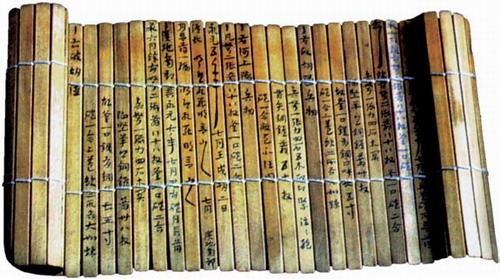
If any of the allusions or references pique your interest and you'd like to know more, drop me a line, because odds are I feel the same way, and I'd be happy to do a little research.
Monday, September 21, 2015
A Lápide de Camilo Pessanha
No Cemitério São Miguel Arcanjo, em Macau, fica a sepultura do poeta, professor, e jurista Camilo Pessanha. No ano passado eu tentei achar a sepultura, mas o cemitério, onde jazem milhares de portugueses, macaenses, e chineses cujos túmulos são abarrotados como sardinhas numa lata, é bem labiríntico. Felizmente, há dois meses, durante o Curso de Verão da Universidade de Macau, achei a sepultura com a assistência do Professor Jorge Cavalheiro, como escrevi num antigo post.


Como pode ver, tirei fotos da lápide vertical e da placa horizontal. Quando eu visitei o cemitério, a placa era quase inteiramente ilegível; só pude ler as palavras "À saudosa memoria" e "Dr Camillo D'Almeida Pessanha," assim como escrito na ortografia antiga. Entretanto, possuo uma cópia do livro A Imagem e o Verbo: Fotobiografia de Camilo Pessanha, que contem uma foto do túmulo de Pessanha melhor do que a minha, e que está incluido aqui abaixo (a última foto).
Os caracteres chineses na pedra vertical não apresentaram um problema tão dificil, embora há um caracter atrás do vaso de flores, que obtei da foto supracitado, e o grupo de caracteres ao lado esquerdo são poucos claros. Alguns caracteres na lápide são obscuros, mas acho que entendo o sentido geral.
Segue abaixo uma provavelmente imperfeita transcrição da inscripção em chinês com tradução em português. Os caracteres na lápide são lidos de cima para baixo, e da direita para esquerda. Os nomes são em mandarim e cantonês; em parênteses é uma descripção do texto.
一九七一年七月廿六日
26 de Julho 1971
先母揚李愛容
Querida imagem da falecida avó Yang Li/Joeng Lei (mulher de Camilo Pessanha)
先祖庇山耶大狀師合墓
Querido avô Bi Shan Ye/Bei Saan Je, grande professor, túmulo conjunto (Pessanha ele mesmo)
先父揚公碧珊
Querido pai Yang Gong Bi Shan/Joeng Gung Bik Saan (filho de Pessanha)
一九七一年七月廿六日
26 de Julho 1971
先母揚李愛容
Querida imagem da falecida avó Yang Li/Joeng Lei (mulher de Camilo Pessanha)
先祖庇山耶大狀師合墓
Querido avô Bi Shan Ye/Bei Saan Je, grande professor, túmulo conjunto (Pessanha ele mesmo)
先父揚公碧珊
Querido pai Yang Gong Bi Shan/Joeng Gung Bik Saan (filho de Pessanha)
O 揚 é talvez 楊, mas estou mais o menos seguro na minha escolha; o caracter final do filho de Pessanha pode ser errado também. Para agora prefiro fazer nada com os caracters no grupo ao lado, porque são muito obscuros.
Não sei o nome português da mulher, ou se ela ainda tinha um, mas a placa horizontal diz que o nome do filho foi João Manoel D'Almeida Pessanha.
Antes de descobrir o túmulo de Camilo Pessanha, eu imaginava que o epitáfio dele seria profundo- uma estrofe duma das suas poemas, talvez alguma coisa chinesa. Em vez disso, fui confrontado por uma lápide simples que não refere à nenhum poesia. O mundo está cheio de surpresas.
Não sei o nome português da mulher, ou se ela ainda tinha um, mas a placa horizontal diz que o nome do filho foi João Manoel D'Almeida Pessanha.
Antes de descobrir o túmulo de Camilo Pessanha, eu imaginava que o epitáfio dele seria profundo- uma estrofe duma das suas poemas, talvez alguma coisa chinesa. Em vez disso, fui confrontado por uma lápide simples que não refere à nenhum poesia. O mundo está cheio de surpresas.

Thursday, July 30, 2015
Curso de Verão: Final Update
7.29.15
It may technically be the 28th again, since I'm writing this on the plane as I fly east toward San Francisco. It doesn't matter, of course; all that matters right now is that I'm slowly making my way home. After another seven or so hours in the air, and a fifteen-hour layover in San Francisco, I'll be Houston bound. I'm getting home not quite a week early so I can attend the memorial reception and burial of my father-in-law, who passed away several days earlier. I've chosen not to discuss it until now, because it was not always clear when exactly I'd be coming home.
On my final night in Macau I make reservations at the Clube Militar, the nearly 150-year-old institution founded as an educational and social organization for Portuguese soldiers. In later years it opened its membership to civilians and developed a more social than educational bent, and in 1995 it began letting non-members dine on the premises. It has a solid reputation in terms of its food and atmosphere, to which I can now personally attest. The service is a little slow, but I'm in no hurry. I wear a jacket and tie since there's a dress code, but judging by the attire of those around me it's considerably looser than I'd expected.
Earlier in the day I make one last trip to the Livraria Portuguesa and carefully go through the shelves again. Naturally, it doesn't take much effort to find a few more books, though the next day, when my bags are packed, I worry about exceeding the airline's weight limit (as it happens, I don't even come close) and for a brief moment almost regret my bibliophilia, so fucking heavy and awkward is my luggage. The real problem is my choice of bags, a problem I'll try to resolve before I go on another trip likely to result in numerous book purchases.
I've alerted the Portuguese Department of my early departure, and Ricardo and company have been nothing but helpful. I'd like to stay the full term, of course, but getting back to Texas is my priority. And so, when the time comes, I clean up my dorm room, make sure I have all my things, and hand my keycard to the guard in the lobby. I use the last 2.5 patacas on my Macau Pass to get to the Praça de Ferreira do Amaral, and from there to the Terminal Marítimo, where I buy a Turbojet ticket to Hong Kong. It's all very matter-of-fact and unemotional; there are no goodbyes said, alas, since I leave while others are in class, though I do leave a note for Eason, thanking him for showing me a part of town I'd not yet seen and telling him to stay in touch. Macau, always ready to welcome newcomers and their money, is as indifferent to my departure as the immigration agent who glances at my passport and lazily flips it back at me. I don't take any of it personally. After all, I just spent sixteen days experiencing Macau in my own way, and it'll take more than a bureaucrat's sour attitude to keep me from coming back.
As the ferry leaves the terminal I see a new island being reclaimed from the sea just to the east of the city. Within a year or two that island will house the immigration and customs complex responsible for traffic coming into Macau across the massive Hong Kong-Zhuhai-Macau bridge, currently under construction. When I came here from Hong Kong I saw significant spans of it lurking in the haze off to starboard, already finished; looking at it again, this time off to port, even more of it stands ready to bear the weight of countless cars, and it seems as if it'll only need another fortnight before it's complete. Who knows what will happen then?
Not me, but when I get back from my next trip to Macau, I'll be sure to once again tell you everything I've learned.
Thanks for reading, folks. Muito obrigado.
D.A.S.
It may technically be the 28th again, since I'm writing this on the plane as I fly east toward San Francisco. It doesn't matter, of course; all that matters right now is that I'm slowly making my way home. After another seven or so hours in the air, and a fifteen-hour layover in San Francisco, I'll be Houston bound. I'm getting home not quite a week early so I can attend the memorial reception and burial of my father-in-law, who passed away several days earlier. I've chosen not to discuss it until now, because it was not always clear when exactly I'd be coming home.
On my final night in Macau I make reservations at the Clube Militar, the nearly 150-year-old institution founded as an educational and social organization for Portuguese soldiers. In later years it opened its membership to civilians and developed a more social than educational bent, and in 1995 it began letting non-members dine on the premises. It has a solid reputation in terms of its food and atmosphere, to which I can now personally attest. The service is a little slow, but I'm in no hurry. I wear a jacket and tie since there's a dress code, but judging by the attire of those around me it's considerably looser than I'd expected.
Earlier in the day I make one last trip to the Livraria Portuguesa and carefully go through the shelves again. Naturally, it doesn't take much effort to find a few more books, though the next day, when my bags are packed, I worry about exceeding the airline's weight limit (as it happens, I don't even come close) and for a brief moment almost regret my bibliophilia, so fucking heavy and awkward is my luggage. The real problem is my choice of bags, a problem I'll try to resolve before I go on another trip likely to result in numerous book purchases.
I've alerted the Portuguese Department of my early departure, and Ricardo and company have been nothing but helpful. I'd like to stay the full term, of course, but getting back to Texas is my priority. And so, when the time comes, I clean up my dorm room, make sure I have all my things, and hand my keycard to the guard in the lobby. I use the last 2.5 patacas on my Macau Pass to get to the Praça de Ferreira do Amaral, and from there to the Terminal Marítimo, where I buy a Turbojet ticket to Hong Kong. It's all very matter-of-fact and unemotional; there are no goodbyes said, alas, since I leave while others are in class, though I do leave a note for Eason, thanking him for showing me a part of town I'd not yet seen and telling him to stay in touch. Macau, always ready to welcome newcomers and their money, is as indifferent to my departure as the immigration agent who glances at my passport and lazily flips it back at me. I don't take any of it personally. After all, I just spent sixteen days experiencing Macau in my own way, and it'll take more than a bureaucrat's sour attitude to keep me from coming back.
As the ferry leaves the terminal I see a new island being reclaimed from the sea just to the east of the city. Within a year or two that island will house the immigration and customs complex responsible for traffic coming into Macau across the massive Hong Kong-Zhuhai-Macau bridge, currently under construction. When I came here from Hong Kong I saw significant spans of it lurking in the haze off to starboard, already finished; looking at it again, this time off to port, even more of it stands ready to bear the weight of countless cars, and it seems as if it'll only need another fortnight before it's complete. Who knows what will happen then?
Not me, but when I get back from my next trip to Macau, I'll be sure to once again tell you everything I've learned.
Thanks for reading, folks. Muito obrigado.
D.A.S.
Monday, July 27, 2015
Curso de Verão: Update #6
7.26.15
I realized yesterday, in yet another case of "D.A. doesn't pay attention", that all my references to "Ferreira Amaral" should really be to "Ferreira do Amaral", since that's the man's proper surname, and what's used on street signs. This oversight, while embarrassing, is made a little less so- but more confusing!- by the fact that all the Macau bus maps, and the signs on the buses themselves, refer to "Praça Ferreira Amaral". Oh well.
Saturday is spent visiting the historic center of Macau, which is another way of saying I spend it dodging the hordes of visitors touring the ruins of São Paulo, the Largo do Senado, and everything in between, which is mainly old buildings tenanted by places selling rather mundane consumer goods, the ubiquitous baked treats (almond cookies and pastéis de nata; I take the opportunity to finally eat one of the latter) and, for as of yet undiscerned reasons, jerky. Rather than mill around for an hour in the sun, I go to Cafe Ou Mun for an espresso, joined by my classmate Ambera. We chat, and I find just enough change in my pocket to pay for my coffee, since they won't take my $HK500 note- it's too early in the day and they don't have change.
Returning to the façade of Macau's most famous landmark, the 200 or so students from the Universidade make a rather rushed visit to the Museu de Macau, where I buy a Macanese cookbook. I've been to the museum before, and while there's a temporary exhibit about trade between France and China during the 18th century worth examining, I get the feeling we shouldn't linger, as there are more places to visit and lunch to be eaten at the Hotel Metropole. Turns out there's only one more stop, the Casa de Lou Kau or 盧家大屋, the significance of which (aside from some good examples of Chinese architecture) is lost on me, seeing as how it's packed and I don't get the chance to read many of the placards. From there, it's off to the hotel, where the Curso de Verão takes up an entire banquet hall and is fed several courses of Chinese food that doesn't quite rank as good, but certainly beats canteen food.
And thus ends our day with the Instituto Cultural, which feels more like a free-for-all than a guided tour, but so it goes. I'm mainly here because I've arranged to find Camilo Pessanha's grave with the help of Jorge Cavalheiro, the sagaciously-bearded gentleman ("Cavalheiro" is Portuguese for "gentleman"- get it?) who's been in Macau for decades. We meet at Caravela and set off toward the perpetually-being-restored Bairro de São Lázaro, situated next to the cemetery. "I've visited this grave many times and always have to look for it," Professor Cavalheiro says as we walk through the densely packed graveyard, which he says does not actually require one to be Catholic in order to acquire permanent residency. We find the grave fairly quickly, I take some photos, and, after making sure I can get back on my own, Professor Cavalheiro bids me farewell: a friend of his lives nearby and he's going to take advantage of the proximity. I'd hoped for more time to converse with him, but I'm happy with what I get, as he answers all my questions about Macau and himself straightforwardly and doesn't hesitate to repeatedly correct my Portuguese.
Professor Cavalheiro says he'll be going back to Portugal for good sometime in the next couple of years, and based on our discussions of Macau's astronomical real estate prices ("renting is expensive, and buying is impossible") and the general surge in the cost of living, I can understand why. There's more to it than that, I'm sure- based on what little I know, the city has become all but unrecognizable over the past couple decades, and no matter how much one loves a place seeing it transform that much is never easy, even if it's for the better. In Macau's case, it could be argued that rapid development has not been quite the blessing some might think, but I'm not in the mood to get into that right now, nor does my opinion count for much in the first place. I'm just pleased to have spent some time with someone who knows so much about this remarkable city.
7.27.15
Man, I didn't even finish talking about Saturday in my last entry, though there isn't much more to add. I visit the Jardim de Lou Lim Ioc/盧廉若公園, a classic Suzhou-style garden, which I'm a total sucker for. There's an art exhibit, complete with the artists involved, going on in what I think is usually the Casa Cultural de Chá, or Cultural Teahouse. I see some neat paintings and some good calligraphy and try a couple thimble-sized cups of tea, one of which I think is an oolong and quite delicious, the other a pu-erh type that's a bit too earthy for me.
Having spent most of the day on my feet on Saturday, Sunday rolls around and I tell myself I'm not gonna do shit. Except, of course, I'm totally gonna do shit, because I'm leaving Macau in a couple days and there's no rest for the wicked. I decide to visit Coloane, which once upon a time was the southernmost island of the territory and its least developed area until- you guessed it- the gambling laws were loosened and foreign gambling interests, mainly American, arrived, which resulted in much of the sea between Taipa and Coloane being reclaimed and covered in casinos and hotels. Taipa's now a horrible mess of perpetual construction; the Cotai strip, as the new patch of land was so christened by professional greedhead/shitheel Sheldon Adelson, lacks any of the little charm and none of the nominal walkability possessed by its Las Vegas counterpart; and Coloane, while currently not under assault by developers, remains a tempting target, since the Macau government continues to straddle the fence with regard to building casinos there.
Fortunately, Coloane remains home to Macau's biggest park, a vast, hilly, tropical sprawl which covers much of the island. The village of Coloane is quiet and fairly picturesque in a run-down, rural way. The Chapel of São Francisco Xavier is supposed to contain one of the saint's arm bones, though I don't spot it during my visit. (There is an exceptionally creepy, dead-eyed baby Jesus, though, and copies of O Clarim, the trilingual Catholic weekly newspaper, are available for 12 patacas a pop; I buy one because I want a copy of each of Macau's Portuguese papers, and it's interesting seeing the presence of an English section- a wise move given that the Filipino Catholic community here probably outnumbers the native Catholics.) I get the feeling half the buildings here aren't inhabited, and I hope I'm wrong, because if I'm not it means the real estate speculation Professor Cavalheiro mentioned has extended even to this easygoing corner of the RAEM. Strolling along the waterfront is pleasant as long as you don't look at the sea: at low tide the sand is studded with broken concrete and trash, and there are people out there jet-skiing and kayaking on water that makes Galveston's look downright inviting. Have fun, dudes.
From the vila de Coloane it's back on the bus, past some Chinese nuns, the prison, and some nice tropical landscapes, to the Praia de Hac Sá, or 黑沙海灘, Macau's major beach. 黑沙 means "black sand", though these days it's mostly grey, and even then only in places- I've read that they filled it in with regular ol' yellowish sand due to erosion. That said, it's a pretty nice place to spend time: I take off my shoes and stroll back down the beach after following the inland course along campgrounds and barbeque pits, the latter already claimed by Filipino families, groups of Muslim women in hijab, and shirtless, tattooed Chinese dudes. When you read, over and over, just how special Macau is for being a tolerant crossroads between east and west, it's easy to roll your eyes and think of such claims as being overwrought attempts at selling the city to the world. But here I am, some barefoot American longhair, watching all kinds of people enjoy a leisurely Sunday of sun worship and grilling outdoors- and, far as I can tell, this sort of behavior is the norm here.
I ran into Professor Cavalheiro on the bus from campus, and he recommended a place called Miramar for lunch. I have no luck finding it, so I hit up my first choice, the world-renowned Fernando's, where a sign out front announces "Não temos ar condicionado, ketchup ou cadeiras para bébés, mas temos comida e bebidas!" (We don't have air conditioning, ketchup, or booster seats, but we have food and drinks!). It's a good thing I'm not very hungry, because the place is packed and the wait, based on the number of people milling about and killing time at the bar, is long enough for me to not even bother asking for a table. Instead, I find a stool at the bar next to a couple Europeans whose language I can't decipher- one minute I think I hear Portuguese, but they speak to the bartender in English; the next minute I hear Dutch syllables, and the next, French, so who knows- and drink a couple bottles of Super Bock in styrofoam coozies. The predominance of Super Bock rather than Sagres in Macau remains a source of curiosity for me. I prefer Sagres, which some places have, but I'd like to know why the other is so popular. I can only assume there's some specific distribution deal in place, or some division along regional, or more arcane, lines among the Portuguese community here that puts Super Bock on top. Anyhoo, Fernando's is a nice place to relax for a bit before catching the bus back to campus, and the beers are reasonably priced.
Sunday night I go to Henri's Galley, purported origin of one of my favorite dishes ever, galinha à africana. Henri's, situated on Avenida da Republica two doors down from a Lotus dealership and commanding a good view of Nam Van and the Macau Tower, has been around since the '70s, and to my surprise doesn't feel like it. The furniture's been updated, as has the lighting, and while there's still a heavily Portuguese nautical theme going on, it's not too kitschy. The overall atmosphere is really nice, I gotta say. The staff is attentive and friendly, and the food- I get torradinhas de camarão, or shrimp toast, and galinha à africana- is great. The recipe for galinha à africana is printed on the placemats and is nearly identical to the one I've followed since I started cooking the dish at home, but there's no mistaking the difference between mine and Henri's. The restaurant's version achieves an amazing balance of coconut and peanut flavors, with the finely-minced shallot and garlic providing a perfect texture and the paprika giving everything a smoky background and lovely red hue.
Suffice to say that I leave contented, and set off up Barra hill to walk off the meal and see the Palacete de Santa Sancha and the surrounding neighborhood, which includes the former Hotel Bela Vista, now the residence of the Consul-Geral de Portugal em Macau e Hong Kong. I walk by a woman offering treats to a stray cat in a tree, which makes me smile. (The cat was on his way down by the time I passed.) There's hardly anyone around save cops on guard duty outside of Santa Sancha and a couple other buildings, and everything is quiet. In short, it's readily apparent that I'm in a wealthy neighborhood, but not once do I feel like I'm being eyeballed or hustled along, nor do I get the impression that the locals with whom I share the street are, either.
When I get back to campus I expect to hear from Calvin and his pals about getting together to drink wine, which we discussed earlier in the day, but no dice. I figure I missed my chance, and then, around 11:30, there's knocking at my door, and I hear Calvin and his friends talking in Cantonese. I'm already in bed, so I ignore them. I'm too old to start drinking at midnight, man, good as it sounds, which honestly ain't that good.
Later, folks. Expect one more update before I get home, probably from Hong Kong.
I realized yesterday, in yet another case of "D.A. doesn't pay attention", that all my references to "Ferreira Amaral" should really be to "Ferreira do Amaral", since that's the man's proper surname, and what's used on street signs. This oversight, while embarrassing, is made a little less so- but more confusing!- by the fact that all the Macau bus maps, and the signs on the buses themselves, refer to "Praça Ferreira Amaral". Oh well.
Saturday is spent visiting the historic center of Macau, which is another way of saying I spend it dodging the hordes of visitors touring the ruins of São Paulo, the Largo do Senado, and everything in between, which is mainly old buildings tenanted by places selling rather mundane consumer goods, the ubiquitous baked treats (almond cookies and pastéis de nata; I take the opportunity to finally eat one of the latter) and, for as of yet undiscerned reasons, jerky. Rather than mill around for an hour in the sun, I go to Cafe Ou Mun for an espresso, joined by my classmate Ambera. We chat, and I find just enough change in my pocket to pay for my coffee, since they won't take my $HK500 note- it's too early in the day and they don't have change.
Returning to the façade of Macau's most famous landmark, the 200 or so students from the Universidade make a rather rushed visit to the Museu de Macau, where I buy a Macanese cookbook. I've been to the museum before, and while there's a temporary exhibit about trade between France and China during the 18th century worth examining, I get the feeling we shouldn't linger, as there are more places to visit and lunch to be eaten at the Hotel Metropole. Turns out there's only one more stop, the Casa de Lou Kau or 盧家大屋, the significance of which (aside from some good examples of Chinese architecture) is lost on me, seeing as how it's packed and I don't get the chance to read many of the placards. From there, it's off to the hotel, where the Curso de Verão takes up an entire banquet hall and is fed several courses of Chinese food that doesn't quite rank as good, but certainly beats canteen food.
And thus ends our day with the Instituto Cultural, which feels more like a free-for-all than a guided tour, but so it goes. I'm mainly here because I've arranged to find Camilo Pessanha's grave with the help of Jorge Cavalheiro, the sagaciously-bearded gentleman ("Cavalheiro" is Portuguese for "gentleman"- get it?) who's been in Macau for decades. We meet at Caravela and set off toward the perpetually-being-restored Bairro de São Lázaro, situated next to the cemetery. "I've visited this grave many times and always have to look for it," Professor Cavalheiro says as we walk through the densely packed graveyard, which he says does not actually require one to be Catholic in order to acquire permanent residency. We find the grave fairly quickly, I take some photos, and, after making sure I can get back on my own, Professor Cavalheiro bids me farewell: a friend of his lives nearby and he's going to take advantage of the proximity. I'd hoped for more time to converse with him, but I'm happy with what I get, as he answers all my questions about Macau and himself straightforwardly and doesn't hesitate to repeatedly correct my Portuguese.
Professor Cavalheiro says he'll be going back to Portugal for good sometime in the next couple of years, and based on our discussions of Macau's astronomical real estate prices ("renting is expensive, and buying is impossible") and the general surge in the cost of living, I can understand why. There's more to it than that, I'm sure- based on what little I know, the city has become all but unrecognizable over the past couple decades, and no matter how much one loves a place seeing it transform that much is never easy, even if it's for the better. In Macau's case, it could be argued that rapid development has not been quite the blessing some might think, but I'm not in the mood to get into that right now, nor does my opinion count for much in the first place. I'm just pleased to have spent some time with someone who knows so much about this remarkable city.
7.27.15
Man, I didn't even finish talking about Saturday in my last entry, though there isn't much more to add. I visit the Jardim de Lou Lim Ioc/盧廉若公園, a classic Suzhou-style garden, which I'm a total sucker for. There's an art exhibit, complete with the artists involved, going on in what I think is usually the Casa Cultural de Chá, or Cultural Teahouse. I see some neat paintings and some good calligraphy and try a couple thimble-sized cups of tea, one of which I think is an oolong and quite delicious, the other a pu-erh type that's a bit too earthy for me.
Having spent most of the day on my feet on Saturday, Sunday rolls around and I tell myself I'm not gonna do shit. Except, of course, I'm totally gonna do shit, because I'm leaving Macau in a couple days and there's no rest for the wicked. I decide to visit Coloane, which once upon a time was the southernmost island of the territory and its least developed area until- you guessed it- the gambling laws were loosened and foreign gambling interests, mainly American, arrived, which resulted in much of the sea between Taipa and Coloane being reclaimed and covered in casinos and hotels. Taipa's now a horrible mess of perpetual construction; the Cotai strip, as the new patch of land was so christened by professional greedhead/shitheel Sheldon Adelson, lacks any of the little charm and none of the nominal walkability possessed by its Las Vegas counterpart; and Coloane, while currently not under assault by developers, remains a tempting target, since the Macau government continues to straddle the fence with regard to building casinos there.
Fortunately, Coloane remains home to Macau's biggest park, a vast, hilly, tropical sprawl which covers much of the island. The village of Coloane is quiet and fairly picturesque in a run-down, rural way. The Chapel of São Francisco Xavier is supposed to contain one of the saint's arm bones, though I don't spot it during my visit. (There is an exceptionally creepy, dead-eyed baby Jesus, though, and copies of O Clarim, the trilingual Catholic weekly newspaper, are available for 12 patacas a pop; I buy one because I want a copy of each of Macau's Portuguese papers, and it's interesting seeing the presence of an English section- a wise move given that the Filipino Catholic community here probably outnumbers the native Catholics.) I get the feeling half the buildings here aren't inhabited, and I hope I'm wrong, because if I'm not it means the real estate speculation Professor Cavalheiro mentioned has extended even to this easygoing corner of the RAEM. Strolling along the waterfront is pleasant as long as you don't look at the sea: at low tide the sand is studded with broken concrete and trash, and there are people out there jet-skiing and kayaking on water that makes Galveston's look downright inviting. Have fun, dudes.
From the vila de Coloane it's back on the bus, past some Chinese nuns, the prison, and some nice tropical landscapes, to the Praia de Hac Sá, or 黑沙海灘, Macau's major beach. 黑沙 means "black sand", though these days it's mostly grey, and even then only in places- I've read that they filled it in with regular ol' yellowish sand due to erosion. That said, it's a pretty nice place to spend time: I take off my shoes and stroll back down the beach after following the inland course along campgrounds and barbeque pits, the latter already claimed by Filipino families, groups of Muslim women in hijab, and shirtless, tattooed Chinese dudes. When you read, over and over, just how special Macau is for being a tolerant crossroads between east and west, it's easy to roll your eyes and think of such claims as being overwrought attempts at selling the city to the world. But here I am, some barefoot American longhair, watching all kinds of people enjoy a leisurely Sunday of sun worship and grilling outdoors- and, far as I can tell, this sort of behavior is the norm here.
I ran into Professor Cavalheiro on the bus from campus, and he recommended a place called Miramar for lunch. I have no luck finding it, so I hit up my first choice, the world-renowned Fernando's, where a sign out front announces "Não temos ar condicionado, ketchup ou cadeiras para bébés, mas temos comida e bebidas!" (We don't have air conditioning, ketchup, or booster seats, but we have food and drinks!). It's a good thing I'm not very hungry, because the place is packed and the wait, based on the number of people milling about and killing time at the bar, is long enough for me to not even bother asking for a table. Instead, I find a stool at the bar next to a couple Europeans whose language I can't decipher- one minute I think I hear Portuguese, but they speak to the bartender in English; the next minute I hear Dutch syllables, and the next, French, so who knows- and drink a couple bottles of Super Bock in styrofoam coozies. The predominance of Super Bock rather than Sagres in Macau remains a source of curiosity for me. I prefer Sagres, which some places have, but I'd like to know why the other is so popular. I can only assume there's some specific distribution deal in place, or some division along regional, or more arcane, lines among the Portuguese community here that puts Super Bock on top. Anyhoo, Fernando's is a nice place to relax for a bit before catching the bus back to campus, and the beers are reasonably priced.
Sunday night I go to Henri's Galley, purported origin of one of my favorite dishes ever, galinha à africana. Henri's, situated on Avenida da Republica two doors down from a Lotus dealership and commanding a good view of Nam Van and the Macau Tower, has been around since the '70s, and to my surprise doesn't feel like it. The furniture's been updated, as has the lighting, and while there's still a heavily Portuguese nautical theme going on, it's not too kitschy. The overall atmosphere is really nice, I gotta say. The staff is attentive and friendly, and the food- I get torradinhas de camarão, or shrimp toast, and galinha à africana- is great. The recipe for galinha à africana is printed on the placemats and is nearly identical to the one I've followed since I started cooking the dish at home, but there's no mistaking the difference between mine and Henri's. The restaurant's version achieves an amazing balance of coconut and peanut flavors, with the finely-minced shallot and garlic providing a perfect texture and the paprika giving everything a smoky background and lovely red hue.
Suffice to say that I leave contented, and set off up Barra hill to walk off the meal and see the Palacete de Santa Sancha and the surrounding neighborhood, which includes the former Hotel Bela Vista, now the residence of the Consul-Geral de Portugal em Macau e Hong Kong. I walk by a woman offering treats to a stray cat in a tree, which makes me smile. (The cat was on his way down by the time I passed.) There's hardly anyone around save cops on guard duty outside of Santa Sancha and a couple other buildings, and everything is quiet. In short, it's readily apparent that I'm in a wealthy neighborhood, but not once do I feel like I'm being eyeballed or hustled along, nor do I get the impression that the locals with whom I share the street are, either.
When I get back to campus I expect to hear from Calvin and his pals about getting together to drink wine, which we discussed earlier in the day, but no dice. I figure I missed my chance, and then, around 11:30, there's knocking at my door, and I hear Calvin and his friends talking in Cantonese. I'm already in bed, so I ignore them. I'm too old to start drinking at midnight, man, good as it sounds, which honestly ain't that good.
Later, folks. Expect one more update before I get home, probably from Hong Kong.
Friday, July 24, 2015
Curso de Verão: Update #5
7.24.15
So there's a student in the Portuguese program, Rafaela, who's from Hangzhou and likes to tease me about not being social enough, going so far as to have called me boring for not participating in the Portuguese folk dance classes offered every Tuesday and Thursday. There's nothing mean-spirited about it, and we always speak in Portuguese, filling in gaps in Mandarin as needed, so I don't mind her needling. Anyway, on Thursday evening my suitemate Eason (yet another misspelling/misunderstanding on my part), who's from Macau, invites me to eat Portuguese food at a place in the Areia Preta/Mong-Ha neighborhood, which is situated in the northern part of town, and says that Rafaela is coming with us. The look on her face when she sees me follow Eason out of the elevator and announce that I'm tagging along is priceless.
We take the bus to Praça Ferreira Amaral, then catch another one that crawls up to the Terminal Marítimo do Porto Exterior, where all the ferries from Hong Kong come in, past the city reservoir, and through a stretch of looming industrial buildings and residential towers that started being built around the middle of the last century, if memory serves me right. Eason points out that the various "associações desportivos" (or something along those lines- I can't recall the exact phrase), for which one sees signs around town, are probably fronts for the triads.
O Porto, which is the name of the restaurant, reminds me of A Vencedora, but a lot smaller and with way more Portuguese football memorabilia on the walls. There's a group of Portuguese dudes out front, smoking and drinking beer and shooting the shit, and the clientele seems pretty family-oriented. I don't think Rafaela's eaten Portuguese food before, so we order a few different things and share them: morcela (I don't tell either of my dining companions that it's made with blood), pastéis de bacalhau, braised oxtail, and bacalhau à Brás, which was new to me and should have been too much salt cod and potato after the pastéis, but was just plain delicious. The meal runs us around 450 patacas, or twenty bucks each- not great, but not terrible. I ate lunch at me and Tracey's favorite, Solmar, earlier in the day, and a meal of pastéis de bacalhau, galinha à africana, and a beer cost me a shocking 300 patacas. While it ain't the best, the food in the canteen is lookin' better and better just by virtue of its price.
Eason's arranged a meeting with someone whose importance I don't quite understand, and insists that going by her place at 9:30 at night is perfectly copacetic. Rafaela and I are both tired, and of course it's way too warm and humid out, which only compounds the problem of exhaustion, but he insists we come along, which involves a slightly less snail-paced bus ride. (Eason informs me that said route is his favorite, because the hilly nature of the route makes it "like a rollercoaster". I concur, though I've never been on such a slow rollercoaster. Fun fact: the Portuguese term for rollercoaster is "montanha russa," or "Russian mountain.") We get off near the Igreja de São Lourenço and wander around until our contact, who I finally learn is a Portuguese folk dance teacher, shows up. When she does, it's with a guy who reminds me of a Lusitanian Tim Robbins in tow, and she lets us into the building and onto the premises of the Grupo de Danças e Cantares de Macau. Here I was thinking I'd be intruding on some poor woman's evening at home, but instead I'm in a series of low-ceilinged rooms with parquet floors, one of which contains a dancefloor and another a wide variety of traditional Portuguese costumes. It remains unclear as to why I'm here, but I play along and talk a bit in Portuguese with a local woman who says their group is going to Portugal in August.
Eason says that people in Macau are lazy about walking, and proves it by insisting we take another meandering bus to get back to Praça Ferreira Amaral. I balk at that shit. Neither he nor Rafaela knows where we are, but I do, so I lead us on foot past the Palácio do Governo and the Grand Emperor Hotel to where we need to be, which takes less than ten minutes. Eason promptly falls asleep on the bus, Rafaela and I compare notes on our respective classes, and then we're back at the Universidade de Macau. It's been a pleasant little adventure, and having some company makes for a nice change.
It's Friday afternoon now, and I think I'll spend it and the evening reading. I want to finish As Portas do Cerco before I leave Macau. Tomorrow morning we're going to tour the historic city center with someone from the Instituto Cultural, followed by lunch; after that, Professor Cavalheiro and yours truly are going to visit Camilo Pessanha's grave. I suspect I'll end up spending the remainder of the afternoon in town as well, so I'd better spare my poor corpse any undue wear any tear until then.
Até logo, caros leitores.
So there's a student in the Portuguese program, Rafaela, who's from Hangzhou and likes to tease me about not being social enough, going so far as to have called me boring for not participating in the Portuguese folk dance classes offered every Tuesday and Thursday. There's nothing mean-spirited about it, and we always speak in Portuguese, filling in gaps in Mandarin as needed, so I don't mind her needling. Anyway, on Thursday evening my suitemate Eason (yet another misspelling/misunderstanding on my part), who's from Macau, invites me to eat Portuguese food at a place in the Areia Preta/Mong-Ha neighborhood, which is situated in the northern part of town, and says that Rafaela is coming with us. The look on her face when she sees me follow Eason out of the elevator and announce that I'm tagging along is priceless.
We take the bus to Praça Ferreira Amaral, then catch another one that crawls up to the Terminal Marítimo do Porto Exterior, where all the ferries from Hong Kong come in, past the city reservoir, and through a stretch of looming industrial buildings and residential towers that started being built around the middle of the last century, if memory serves me right. Eason points out that the various "associações desportivos" (or something along those lines- I can't recall the exact phrase), for which one sees signs around town, are probably fronts for the triads.
O Porto, which is the name of the restaurant, reminds me of A Vencedora, but a lot smaller and with way more Portuguese football memorabilia on the walls. There's a group of Portuguese dudes out front, smoking and drinking beer and shooting the shit, and the clientele seems pretty family-oriented. I don't think Rafaela's eaten Portuguese food before, so we order a few different things and share them: morcela (I don't tell either of my dining companions that it's made with blood), pastéis de bacalhau, braised oxtail, and bacalhau à Brás, which was new to me and should have been too much salt cod and potato after the pastéis, but was just plain delicious. The meal runs us around 450 patacas, or twenty bucks each- not great, but not terrible. I ate lunch at me and Tracey's favorite, Solmar, earlier in the day, and a meal of pastéis de bacalhau, galinha à africana, and a beer cost me a shocking 300 patacas. While it ain't the best, the food in the canteen is lookin' better and better just by virtue of its price.
Eason's arranged a meeting with someone whose importance I don't quite understand, and insists that going by her place at 9:30 at night is perfectly copacetic. Rafaela and I are both tired, and of course it's way too warm and humid out, which only compounds the problem of exhaustion, but he insists we come along, which involves a slightly less snail-paced bus ride. (Eason informs me that said route is his favorite, because the hilly nature of the route makes it "like a rollercoaster". I concur, though I've never been on such a slow rollercoaster. Fun fact: the Portuguese term for rollercoaster is "montanha russa," or "Russian mountain.") We get off near the Igreja de São Lourenço and wander around until our contact, who I finally learn is a Portuguese folk dance teacher, shows up. When she does, it's with a guy who reminds me of a Lusitanian Tim Robbins in tow, and she lets us into the building and onto the premises of the Grupo de Danças e Cantares de Macau. Here I was thinking I'd be intruding on some poor woman's evening at home, but instead I'm in a series of low-ceilinged rooms with parquet floors, one of which contains a dancefloor and another a wide variety of traditional Portuguese costumes. It remains unclear as to why I'm here, but I play along and talk a bit in Portuguese with a local woman who says their group is going to Portugal in August.
Eason says that people in Macau are lazy about walking, and proves it by insisting we take another meandering bus to get back to Praça Ferreira Amaral. I balk at that shit. Neither he nor Rafaela knows where we are, but I do, so I lead us on foot past the Palácio do Governo and the Grand Emperor Hotel to where we need to be, which takes less than ten minutes. Eason promptly falls asleep on the bus, Rafaela and I compare notes on our respective classes, and then we're back at the Universidade de Macau. It's been a pleasant little adventure, and having some company makes for a nice change.
It's Friday afternoon now, and I think I'll spend it and the evening reading. I want to finish As Portas do Cerco before I leave Macau. Tomorrow morning we're going to tour the historic city center with someone from the Instituto Cultural, followed by lunch; after that, Professor Cavalheiro and yours truly are going to visit Camilo Pessanha's grave. I suspect I'll end up spending the remainder of the afternoon in town as well, so I'd better spare my poor corpse any undue wear any tear until then.
Até logo, caros leitores.
Wednesday, July 22, 2015
Curso de Verão: Update #4
7.20.15 (evening)
By the time I finish writing my last entry it's 3:30, the rain had long since stopped, there's was no word from Darren or Calvin (AKA Kelvin, as I originally misheard his name) about fresh plans to go to Coloane, and I don't feel like hanging around on campus for the rest of the day. The sky is still overcast and the temperature isn't unbearable, so I grab my Olympus OM-10 and get on the bus to Praça Ferreira Amaral, the beating heart of Macau's public transit network. The statue of the one-armed governor- who upon his arrival in Macau banished the traditional Chinese authorities in order to make the place a proper Portuguese colony, and who was soon thereafter murdered for his trouble- has been gone for years, leaving plenty of space for the dozens of buses that disgorge and swallow up passengers from all over the city 18 hours a day.
While nobody deserves to be beheaded and mutilated, Ferreira Amaral strikes me as an embodiment as the worst kind of 19th century colonial chauvinism. Granted, I don't know what orders he had from Lisbon, nor can I posthumously read his mind, but Macau had survived for almost three centuries under Chinese sufferance without too much interference from Portugal. But hey, why let a relatively good thing continue when you can flex your atrophied imperial muscles in the face of growing British competition, and rub the noses of the Chinese in it too?
Anyway, enough about Ferreira Amaral, whose statue now inhabits a meager park in one of Lisbon's eastern suburbs. I set out on a generally southwest course along the Avenida da Praia Grande, wishing I'd been able to see it before the quote-unquote progress of the mid-'90s split the Baia da Praia Grande into the Lagos de Sai Van and Nam Van, with the leftovers being filled in to accomodate Macau's need for more land. Tracey was lucky enough to visit Macau before that happened, and I envy her for it; fortunately, once I get far enough south, the aterros end, and while the barriers and bridges that make up the respective lakes are still visible, along with the fringe of land along their southern curve that houses the Macau Tower and far too much car-infested real estate, the atmosphere is much different than the overwhelming urban bustle a mere five minutes' walk away. The Avenida da República, which conforms to the northern and western edges of Sai Van, is a downright treat to stroll at five-something in the afternoon, even when I nearly lose my camera's lens cap in the water when I sit down on the barragem to change film.
The historic center of Macau is on the UNESCO World Heritage list, and rightfully so, but I find myself more interested these days in the city's less magnificent architecture, specifically mid- to late-20th century residential buildings. There's something about many of Macau's edifícios/大廈 that I find appealing, despite most of them being conventially ugly, or at best utilitarian in appearance. Features like gracefully curved iron bars over semicircular balconies and windows, the latter of which are shielded from rain by arched tile or brick overhangs; the way the color schemes of the buildings have changed with age and increasing pollution; the small square tiles used to cover vast amounts of vertical square footage; the ubiquitous nameplates in gold ink on oxblood marble seen over so many main entrances: I love it all. When I first came to Macau three years ago all I saw was Hong Kong's rattier cousin with some old Portuguese buildings here and there, an assessment that still holds true in many ways (not that HK isn't bursting at the seams with its own brand of shabbiness, which isn't much different than Macau's), but I've come to appreciate the city's appearance in a wholly different way, one that doesn't rely on the UNESCO-approved parts of town for its justification.
It's a really good walk, capped off by getting briefly lost in the labyrinthine streets east of the Porto Interior and south of Avenida Almeida Ribeiro/San Ma Lou/新馬路. I consider going to Caravela or Terra for coffee, but there's no reason to spend the money. Back to the Universidade, and an early bedtime, it is.
7.22.15
Tuesday is plagued by almost continual rain, so I spend my time holed up in the dorm or at the library, reading and writing. I think the extremely hot days I encountered when I first got here were unusual, since the temperature as of late has been more manageable, though it's been no less humid. Maybe it's because they're smart enough to use umbrellas as parasols, but I swear I haven't seen any of the Chinese girls here sweat. Me, I've probably got salt deposits along the seams of all my shirts.
I'm currently reading two novels in Portuguese, the aforementioned library copy of As Portas do Cerco and Era Uma Vez em Goa, by Paulo Varela Gomes. The latter book is one I saw in a Lisbon bookstore earlier this year but didn't buy, and is also the example I used earlier in my discussion of prices in Macau. While it was more expensive than I'd have preferred, I don't regret buying it, because it's a real pleasure to read. My Portuguese has gotten decent enough for me to begin appreciating different writing styles, albeit in a rather superficial way, but even so the difference between these two books is like night and day. When I need a break from the language of Camões (a typically Portuguese way of referring to their language; if English-speakers have an equivalent and call their tongue the "language of Shakespeare" on a regular basis, I'm unaware of it), I re-read Thomas Pynchon's awesome, hilarious Inherent Vice or a collection of Elmore Leonard's Western stories, which are a little too similar to one another but quite well-written.
We have the declamação de poesia this morning after our first two-hour block of classes. Students from every turma participate, and since a collection of Portuguese poetry was handed out last week there's some repetition of what people recite. Overall, however, I'm impressed by everyone's performance, and by the fact that so many people get up to read poems, since that shit ain't easy even if you're reading someone else's work. I barely remember reading mine because it's over so fast; a link to the poem is below if you want to read it. Everyone gets a certificate of participation (the most substantial compensation I'll probably ever receive related to poetry) and the best readings get prizes. Said prizes are volumes of poetry by Yao Feng, the pen name of Yao Jingming, who teaches here at the Universidade and reads us some of his work. I've read some of his poetry before, and his newest book is on sale at the Livraria Portuguesa. When I go back I'll probably pick it up (a phrase I'll be using repeatedly in the coming days, methinks).
In the auditorium where the declamação is held I end up sitting next to Gertrudes, the young lady from Timor-Leste. This is the first time we get to talk at length, and I'm glad I have the chance. I don't think she's left campus very much, so I'd like to invite her and some other folks, including my Macanese suitemate, into doing some sightseeing and/or eating dinner. Her Portuguese is quite good, and while her native language, Tetum, has a lot of Portuguese loanwords, she tells me that speaking Portuguese in Timor, even at university, is seen as strange and possibly hazardous to one's ability to maintain their mother tongue. That's understandable, I suppose, but she also mentions that English is the language folks really want to learn, for all the same boring reasons everyone wants to learn it. I understand those reasons, and I'm inevitably being hardheaded and snobbish when I say that I'd much rather see a world wherein English (or any one language, really) doesn't play such a dominant role. It's the same reason I don't like seeing the encroachment of simplified Chinese writing and spoken Mandarin in Macau and Hong Kong, or the frequent, unnecessary acordos ortográficos da lingua portuguesa: humans are flexible enough to put up with shit like different spellings or pronunciations, and monoculture does nobody except the worst of us any favors. I fear that I'm fighting a rearguard action, however- but instead of throwing up my hands I do something, anything, to maintain the diversity of things as they currently are. That means embarrassing myself by speaking shitty Cantonese instead of embarrassing myself by speaking shitty Mandarin, demanding that os colegas do curso de verão falam português comigo, using patacas instead of Hong Kong dollars, and so on.
Não entendo por que a lusofonia é tão importante para mim, mas é. É possível que no próximo ano estarei fixo numa outra língua, ou talvez preocupado inteiramente com outro assunto. Tais possibilidades não me incomodam; são facetas da vida inquisitiva. Não, o que me importa neste momento é aproveitar esta oportunidade, esta imersão na língua e cultura portuguesas, e isso é precisamente que vou fazer, aqui na margem desta território que até 1999 era a Cidade do Santo Nome de Deus de Macau, Não Há Outra Mais Leal, mas agora tem o nome menos memorável de Região Administrativa Especial de Macau da República Popular da China. Não precisa de Deus para fazer esta cidade um lugar único, mas precisa de pessoas, e enquanto estou aqui, tentarei ser uma daquelas.
"Segredo" de Carlos Drummond de Andrade:
http://www.escritas.org/pt/poema/1783/segredo
By the time I finish writing my last entry it's 3:30, the rain had long since stopped, there's was no word from Darren or Calvin (AKA Kelvin, as I originally misheard his name) about fresh plans to go to Coloane, and I don't feel like hanging around on campus for the rest of the day. The sky is still overcast and the temperature isn't unbearable, so I grab my Olympus OM-10 and get on the bus to Praça Ferreira Amaral, the beating heart of Macau's public transit network. The statue of the one-armed governor- who upon his arrival in Macau banished the traditional Chinese authorities in order to make the place a proper Portuguese colony, and who was soon thereafter murdered for his trouble- has been gone for years, leaving plenty of space for the dozens of buses that disgorge and swallow up passengers from all over the city 18 hours a day.
While nobody deserves to be beheaded and mutilated, Ferreira Amaral strikes me as an embodiment as the worst kind of 19th century colonial chauvinism. Granted, I don't know what orders he had from Lisbon, nor can I posthumously read his mind, but Macau had survived for almost three centuries under Chinese sufferance without too much interference from Portugal. But hey, why let a relatively good thing continue when you can flex your atrophied imperial muscles in the face of growing British competition, and rub the noses of the Chinese in it too?
Anyway, enough about Ferreira Amaral, whose statue now inhabits a meager park in one of Lisbon's eastern suburbs. I set out on a generally southwest course along the Avenida da Praia Grande, wishing I'd been able to see it before the quote-unquote progress of the mid-'90s split the Baia da Praia Grande into the Lagos de Sai Van and Nam Van, with the leftovers being filled in to accomodate Macau's need for more land. Tracey was lucky enough to visit Macau before that happened, and I envy her for it; fortunately, once I get far enough south, the aterros end, and while the barriers and bridges that make up the respective lakes are still visible, along with the fringe of land along their southern curve that houses the Macau Tower and far too much car-infested real estate, the atmosphere is much different than the overwhelming urban bustle a mere five minutes' walk away. The Avenida da República, which conforms to the northern and western edges of Sai Van, is a downright treat to stroll at five-something in the afternoon, even when I nearly lose my camera's lens cap in the water when I sit down on the barragem to change film.
The historic center of Macau is on the UNESCO World Heritage list, and rightfully so, but I find myself more interested these days in the city's less magnificent architecture, specifically mid- to late-20th century residential buildings. There's something about many of Macau's edifícios/大廈 that I find appealing, despite most of them being conventially ugly, or at best utilitarian in appearance. Features like gracefully curved iron bars over semicircular balconies and windows, the latter of which are shielded from rain by arched tile or brick overhangs; the way the color schemes of the buildings have changed with age and increasing pollution; the small square tiles used to cover vast amounts of vertical square footage; the ubiquitous nameplates in gold ink on oxblood marble seen over so many main entrances: I love it all. When I first came to Macau three years ago all I saw was Hong Kong's rattier cousin with some old Portuguese buildings here and there, an assessment that still holds true in many ways (not that HK isn't bursting at the seams with its own brand of shabbiness, which isn't much different than Macau's), but I've come to appreciate the city's appearance in a wholly different way, one that doesn't rely on the UNESCO-approved parts of town for its justification.
It's a really good walk, capped off by getting briefly lost in the labyrinthine streets east of the Porto Interior and south of Avenida Almeida Ribeiro/San Ma Lou/新馬路. I consider going to Caravela or Terra for coffee, but there's no reason to spend the money. Back to the Universidade, and an early bedtime, it is.
7.22.15
Tuesday is plagued by almost continual rain, so I spend my time holed up in the dorm or at the library, reading and writing. I think the extremely hot days I encountered when I first got here were unusual, since the temperature as of late has been more manageable, though it's been no less humid. Maybe it's because they're smart enough to use umbrellas as parasols, but I swear I haven't seen any of the Chinese girls here sweat. Me, I've probably got salt deposits along the seams of all my shirts.
I'm currently reading two novels in Portuguese, the aforementioned library copy of As Portas do Cerco and Era Uma Vez em Goa, by Paulo Varela Gomes. The latter book is one I saw in a Lisbon bookstore earlier this year but didn't buy, and is also the example I used earlier in my discussion of prices in Macau. While it was more expensive than I'd have preferred, I don't regret buying it, because it's a real pleasure to read. My Portuguese has gotten decent enough for me to begin appreciating different writing styles, albeit in a rather superficial way, but even so the difference between these two books is like night and day. When I need a break from the language of Camões (a typically Portuguese way of referring to their language; if English-speakers have an equivalent and call their tongue the "language of Shakespeare" on a regular basis, I'm unaware of it), I re-read Thomas Pynchon's awesome, hilarious Inherent Vice or a collection of Elmore Leonard's Western stories, which are a little too similar to one another but quite well-written.
We have the declamação de poesia this morning after our first two-hour block of classes. Students from every turma participate, and since a collection of Portuguese poetry was handed out last week there's some repetition of what people recite. Overall, however, I'm impressed by everyone's performance, and by the fact that so many people get up to read poems, since that shit ain't easy even if you're reading someone else's work. I barely remember reading mine because it's over so fast; a link to the poem is below if you want to read it. Everyone gets a certificate of participation (the most substantial compensation I'll probably ever receive related to poetry) and the best readings get prizes. Said prizes are volumes of poetry by Yao Feng, the pen name of Yao Jingming, who teaches here at the Universidade and reads us some of his work. I've read some of his poetry before, and his newest book is on sale at the Livraria Portuguesa. When I go back I'll probably pick it up (a phrase I'll be using repeatedly in the coming days, methinks).
In the auditorium where the declamação is held I end up sitting next to Gertrudes, the young lady from Timor-Leste. This is the first time we get to talk at length, and I'm glad I have the chance. I don't think she's left campus very much, so I'd like to invite her and some other folks, including my Macanese suitemate, into doing some sightseeing and/or eating dinner. Her Portuguese is quite good, and while her native language, Tetum, has a lot of Portuguese loanwords, she tells me that speaking Portuguese in Timor, even at university, is seen as strange and possibly hazardous to one's ability to maintain their mother tongue. That's understandable, I suppose, but she also mentions that English is the language folks really want to learn, for all the same boring reasons everyone wants to learn it. I understand those reasons, and I'm inevitably being hardheaded and snobbish when I say that I'd much rather see a world wherein English (or any one language, really) doesn't play such a dominant role. It's the same reason I don't like seeing the encroachment of simplified Chinese writing and spoken Mandarin in Macau and Hong Kong, or the frequent, unnecessary acordos ortográficos da lingua portuguesa: humans are flexible enough to put up with shit like different spellings or pronunciations, and monoculture does nobody except the worst of us any favors. I fear that I'm fighting a rearguard action, however- but instead of throwing up my hands I do something, anything, to maintain the diversity of things as they currently are. That means embarrassing myself by speaking shitty Cantonese instead of embarrassing myself by speaking shitty Mandarin, demanding that os colegas do curso de verão falam português comigo, using patacas instead of Hong Kong dollars, and so on.
Não entendo por que a lusofonia é tão importante para mim, mas é. É possível que no próximo ano estarei fixo numa outra língua, ou talvez preocupado inteiramente com outro assunto. Tais possibilidades não me incomodam; são facetas da vida inquisitiva. Não, o que me importa neste momento é aproveitar esta oportunidade, esta imersão na língua e cultura portuguesas, e isso é precisamente que vou fazer, aqui na margem desta território que até 1999 era a Cidade do Santo Nome de Deus de Macau, Não Há Outra Mais Leal, mas agora tem o nome menos memorável de Região Administrativa Especial de Macau da República Popular da China. Não precisa de Deus para fazer esta cidade um lugar único, mas precisa de pessoas, e enquanto estou aqui, tentarei ser uma daquelas.
"Segredo" de Carlos Drummond de Andrade:
http://www.escritas.org/pt/poema/1783/segredo
Subscribe to:
Posts (Atom)